




What's Happening?
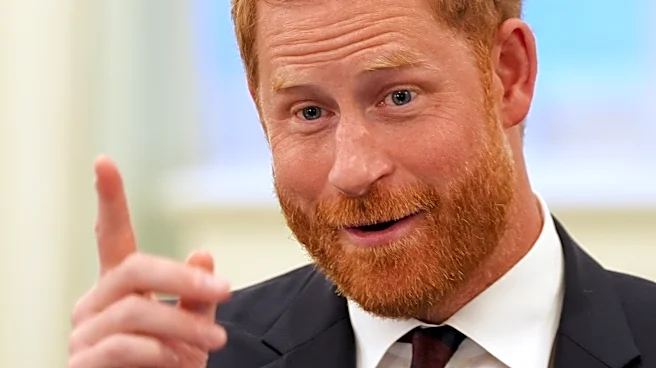
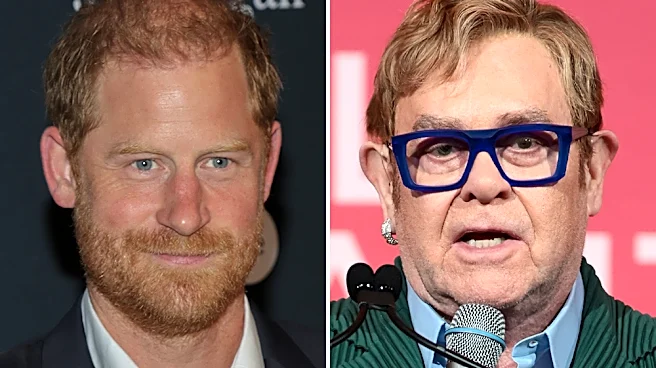
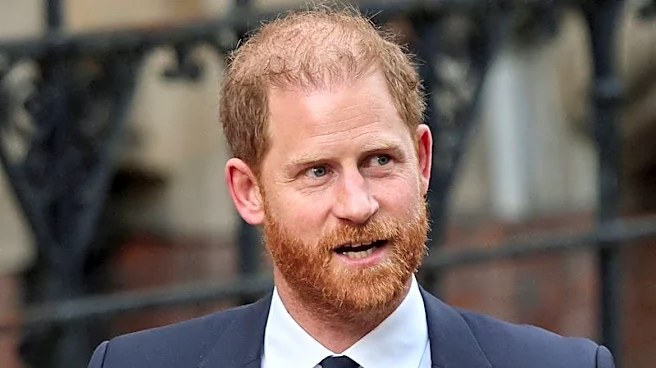
Prince Harry, along with other high-profile individuals including Elton John and David Furnish, has been ordered by London's High Court to make an interim payment of £9.54 million (approximately $17.9 million Cdn) towards the legal costs of the Daily
Mail's publisher, Associated Newspapers. This ruling follows the comprehensive rejection of their privacy lawsuits last month by Judge Matthew Nicklin. The claimants had alleged widespread unlawful activities, such as phone hacking, by the Mail titles. Judge Nicklin was highly critical of the way the claimants' case was presented, stating that serious allegations rested on 'speculative and inferential' foundations and that the conduct was 'unreasonable to a high degree.' The payment is to be made on an 'indemnity basis,' meaning the losing parties must contribute to Associated Newspapers' legal costs without the publisher needing to prove these costs were reasonable and proportionate. Associated Newspapers had incurred a legal bill of £34.5 million (approximately $64.7 million Cdn), while the claimants' insurance policy covered only £16 million (approximately $30 million Cdn).
Why It's Important?
This ruling underscores the significant financial risks associated with high-profile privacy litigation, particularly when claims are deemed to lack sufficient evidence. For public figures, pursuing such lawsuits can result in substantial financial penalties if the court finds their case to be poorly constructed or based on speculation. The 'indemnity basis' for payment further amplifies this risk, as it removes the usual requirement for the winning party to justify the reasonableness of their legal expenses. This outcome could deter future privacy lawsuits against media organizations, especially those brought by celebrities or public figures, by highlighting the potential for considerable financial losses. It also reinforces the legal system's demand for concrete evidence in such cases, rather than relying on inference or speculation, thereby potentially influencing how future legal challenges against media practices are approached in the UK.
What's Next?
The immediate next step for Prince Harry and the other claimants is to make the interim payment of £9.54 million to Associated Newspapers. While a spokesperson for Prince Harry did not immediately comment on the ruling, he had previously described the initial court loss as a 'complete and obvious whitewash.' This case marks the final outstanding litigation in a series of lawsuits Prince Harry had filed against tabloid publishers. Although this specific case has concluded with a financial penalty for the claimants, the broader implications for media privacy laws and the conduct of high-profile individuals in pursuing legal action against the press will likely continue to be debated. The ruling may also influence how other public figures assess the viability and financial risks of similar privacy claims in the future.
Beyond the Headlines
This legal outcome extends beyond the immediate financial implications, touching upon the broader ethical and legal landscape of media accountability and privacy in the digital age. The court's strong criticism of the claimants' 'speculative and inferential' allegations highlights the challenge of proving unlawful information gathering, such as phone hacking, without direct evidence. This case could set a precedent for how courts evaluate the burden of proof in privacy lawsuits against media entities, potentially making it more difficult for individuals to successfully challenge journalistic practices based on circumstantial evidence. Furthermore, the substantial legal costs involved, even for high-net-worth individuals, underscore the prohibitive nature of such litigation for those with fewer resources, raising questions about equitable access to justice in privacy disputes against powerful media organizations. The ruling also implicitly reinforces the importance of robust journalistic defense against claims that lack concrete substantiation.