







What's Happening?
Virginia state lawmakers are preparing to debate several bills in January that aim to halt data center development across the commonwealth. Senator Russett Perry, D-Loudoun, has filed Senate Bill 843, co-sponsored by Senator Danica Roem, D-Prince William,
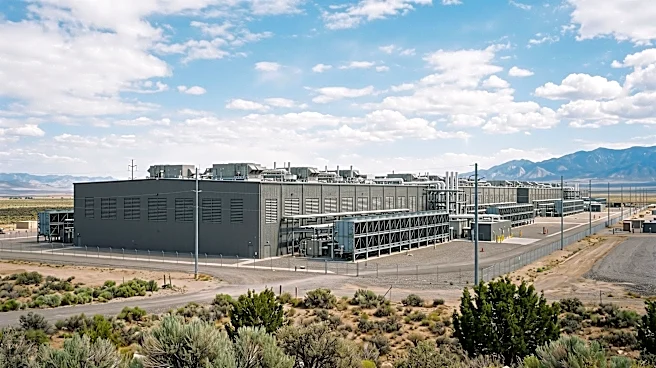
which proposes a three-year moratorium on new data center building permits statewide from July 2027 to July 2030. This bill would also prevent the advancement of related infrastructure projects, such as distribution lines and on-site power, that exclusively serve data centers during the same period. The legislative push comes as Virginia faces increasing saturation from nearly 400 operational data centers, with over 280 more planned. Concerns include exploding energy demand, rising tensions over water usage, noise levels, and the impact on rural areas. Senator Roem is also introducing a separate bill linking new data center approvals to the energization of existing power requests from Dominion Energy. Additionally, Delegate Irene Shin, D-Fairfax, has proposed a bill to block zoning and permitting until all pending interconnection requests are fulfilled or July 2028, whichever comes first. Senator Glen Sturtevant, R-Chesterfield, plans to file his own moratorium bill, citing increased electricity bills for constituents due to data center proliferation.
Why It's Important?
The proposed moratoriums signal a potential shift in Virginia's legislative approach to data center development, an industry that has significantly contributed to the state's economy but also raised environmental and infrastructure concerns. Virginia currently hosts more data centers than anywhere else globally, leading to substantial energy and water demands. The bills aim to address these issues, particularly the strain on the power grid and groundwater resources, especially in eastern coastal regions where water availability is projected to decline. Ratepayers could see relief from rising electricity bills if the costs associated with data center power generation and transmission are no longer subsidized by them. However, the Data Center Coalition and the International Brotherhood of Electrical Workers (IBEW) oppose these moratoriums, arguing that they could jeopardize billions in investments, high-wage jobs in manufacturing, electrical, and construction sectors, and significant tax revenue. The debate highlights a conflict between economic growth driven by the tech industry and environmental sustainability, as well as the financial burden on residents.
What's Next?
The proposed data center moratorium bills will be debated during the Virginia General Assembly's regular session, which begins on January 13. For any of these bills to become law, they must secure approval from both legislative chambers and the governor. Governor Abigail Spanberger recently denied a request from Senators Perry and Richard Stuart to hold a special session to address water concerns related to data centers before January. Governor Spanberger has also revealed her own data center policy framework, which focuses on transparency in permitting, assigning more transmission costs to data centers, and limiting on-site gas generation. Most of her proposed measures would require legislative action to be enacted. The outcome of these legislative efforts will determine the future pace and regulation of data center expansion in Virginia, potentially impacting the state's economic development trajectory, energy policy, and environmental protection efforts. Stakeholders, including industry groups, labor unions, and environmental advocates, are expected to actively lobby lawmakers during the session.
Beyond the Headlines
The legislative push for a data center moratorium in Virginia reflects a broader national and global reckoning with the environmental footprint of the digital economy. While data centers are crucial for modern infrastructure, their intensive energy and water consumption are increasingly scrutinized. This situation in Virginia highlights the tension between fostering technological growth and ensuring sustainable resource management. The debate also touches upon the equitable distribution of costs and benefits, as residents bear the brunt of increased utility prices and environmental impacts while the industry reaps significant profits. The outcome in Virginia could set a precedent for other states grappling with similar issues, potentially influencing how future large-scale industrial developments are regulated. Furthermore, it underscores the evolving role of state governments in balancing economic incentives with public welfare and environmental stewardship in an era of rapid technological expansion.