




What's Happening?
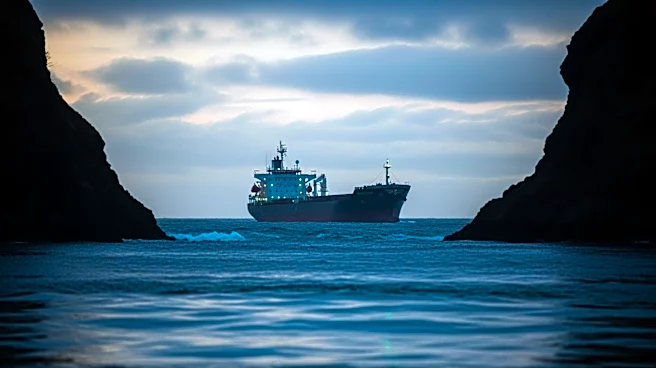
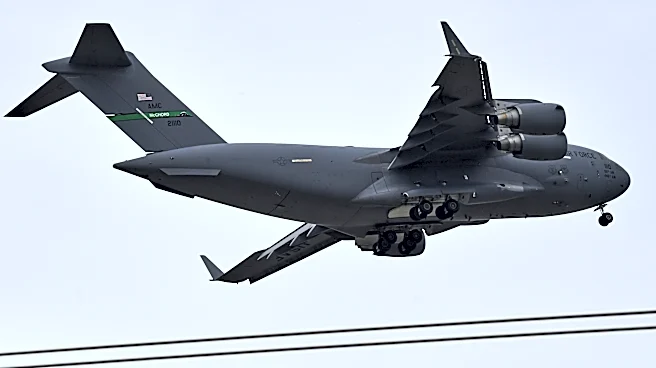
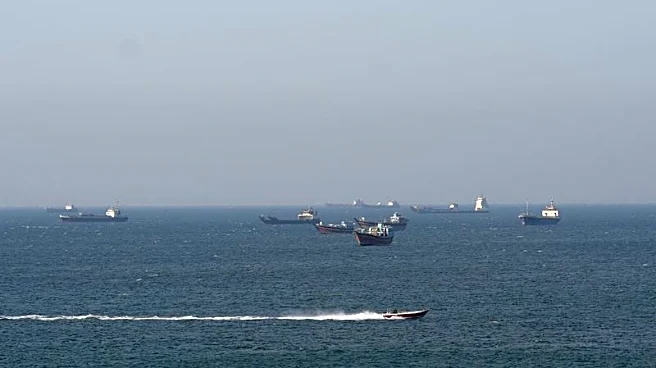
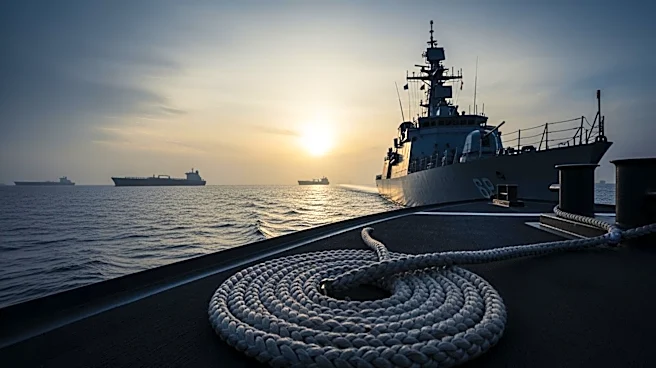
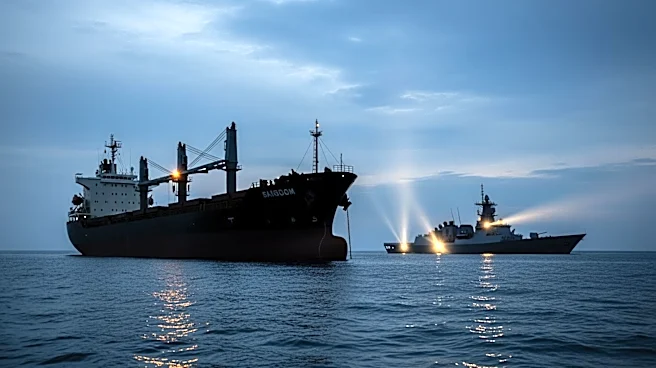
Shipping activity through the Strait of Hormuz has significantly decreased following a recent escalation involving Iran and the United States. Over the weekend, Iran fired warning shots at vessels, and the U.S. military seized an Iranian cargo ship. This
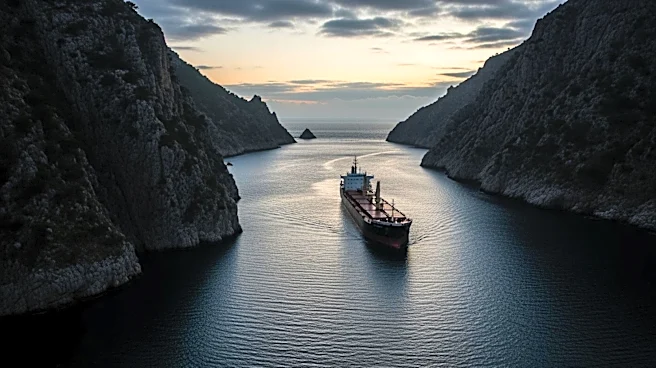
has led to a dramatic reduction in the number of ships passing through the strait, with only a fraction of the usual 130 vessels per day making the transit. The situation has been further complicated by the Trump administration's decision to renew a waiver on sanctions for Russian oil, allowing purchases to resume temporarily. This move comes amid fears that the ceasefire between the U.S. and Iran could collapse, as Iran has vowed retaliation and refused to engage in new peace talks.
Why It's Important?
The Strait of Hormuz is a critical chokepoint for global oil transportation, and disruptions here can have significant implications for global oil prices and supply chains. The recent tensions have already led to a rise in oil prices, with Brent crude futures and U.S. West Texas Intermediate both seeing increases. The situation also affects war risk insurance rates, which have risen due to the heightened risk of conflict. The geopolitical tensions between the U.S. and Iran could lead to broader instability in the region, impacting international relations and economic policies. The renewal of the waiver on Russian oil sanctions by the Trump administration highlights the complex interplay of global energy politics and economic strategies.
What's Next?
The situation remains volatile, with potential for further escalation if Iran follows through on its threats of retaliation. The international community, including countries like Germany, may seek to play a role in securing the strait to ensure the safe passage of vessels. The ongoing tensions could prompt further diplomatic efforts to de-escalate the situation, though the timing and success of such efforts remain uncertain. The impact on global oil markets will continue to be closely monitored, as any prolonged disruption could have far-reaching economic consequences.