





What's Happening?
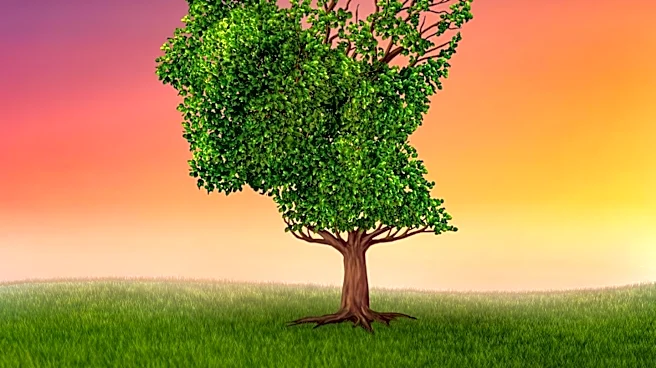
Research from Monash University, published in the American Journal of Biological Anthropology, suggests a significant overhaul of the human family tree's classification. Lead researcher Dr. Ian Towle proposes expanding the genus Homo to include all human species
and closely related fossil forms from the past 4-5 million years, such as Australopithecus and Paranthropus. This proposal stems from growing evidence that recent fossil discoveries are blurring the traditional boundaries between our ancestors and close fossil relatives. The current classification system, which often depicts human evolution as a linear sequence of distinct species, is becoming less accurate as new finds challenge the traits previously used to differentiate between genera like Homo, Australopithecus, and Paranthropus. Dr. Towle argues that traditional distinctions based on brain size, tool use, and anatomical characteristics are no longer consistently applicable across all accepted members of Homo and its relatives.
Why It's Important?
This proposed taxonomic revision is important because it reflects a fundamental shift in how scientists understand human evolution. By grouping Australopithecus and Paranthropus within the genus Homo, the new classification would provide a more consistent and accurate representation of the complex evolutionary relationships revealed by the expanding fossil record. This change could simplify the classification system, reducing the need for constant re-evaluation as new fossils emerge. It also highlights the limitations of older, more rigid taxonomic approaches and emphasizes the importance of modern taxonomy, which prioritizes shared ancestry and clades (groups including a common ancestor and all its descendants). For researchers and educators, this reclassification would necessitate a rewrite of textbooks and a re-framing of discussions about human origins, offering a more nuanced and interconnected view of our evolutionary past.
What's Next?
The proposal to expand the genus Homo will likely spark considerable debate within the paleoanthropological community. Researchers will need to critically evaluate the evidence presented by Dr. Towle and consider the implications of such a broad reclassification. If adopted, this change would lead to a significant restructuring of the human family tree, impacting how new fossil discoveries are categorized and interpreted. It could also influence future research directions, encouraging a more integrated approach to studying early hominins rather than focusing on distinct, separate lineages. The scientific community will engage in discussions and further research to determine the most accurate and stable way to represent human evolutionary history, potentially leading to a consensus on this revised taxonomic framework.
Beyond the Headlines
Beyond the immediate scientific implications, this proposed revision to the human family tree touches upon deeper philosophical and cultural understandings of human identity and our place in the natural world. By blurring the lines between what were once considered distinct ancestral species, it reinforces the idea of a more continuous and interconnected evolutionary journey. This can challenge anthropocentric views that emphasize human uniqueness and separation from other hominins. Ethically, it encourages a more inclusive perspective on our evolutionary relatives, acknowledging the shared heritage across different hominin groups. Culturally, it could lead to a richer public discourse about human origins, moving beyond simplistic linear narratives to embrace the complexity and branching nature of our past. This shift in classification ultimately contributes to a more humble and scientifically grounded understanding of what it means to be human.