







What's Happening?
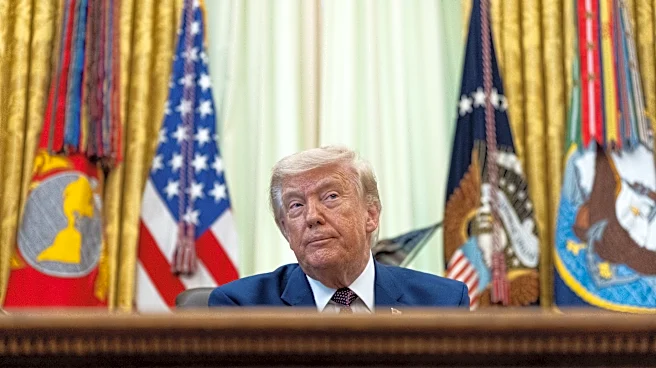
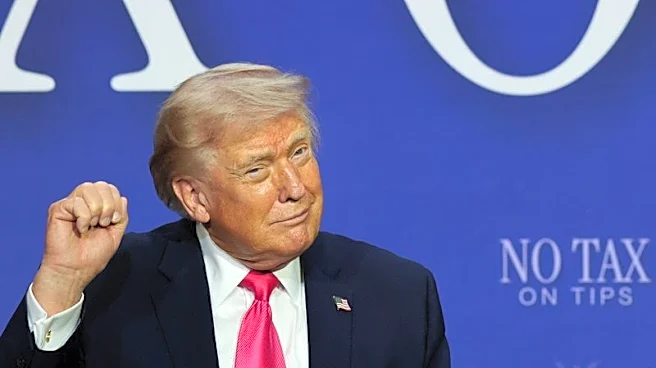
The SAVE America Act, a comprehensive election reform bill championed by President Trump, has been rejected by the Senate. The bill was introduced as an amendment during discussions on an immigration funding package. Initially passed by the House in February,
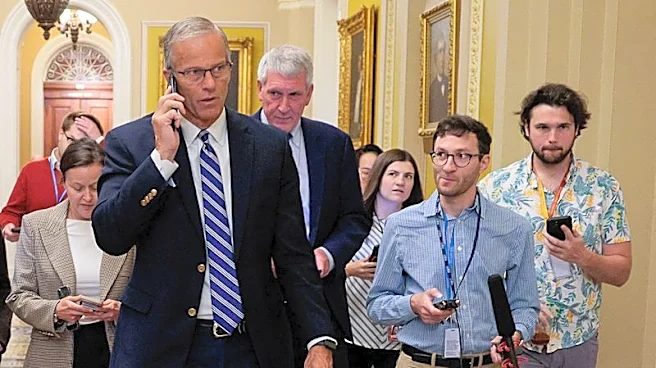
the bill faced significant opposition in the Senate. The proposed legislation aimed to implement strict voter identification requirements, mandating documents like passports or birth certificates for voter registration. Critics argue that such measures are unnecessary, as noncitizen voting is extremely rare. Despite President Trump's insistence on the bill's importance, Senate Majority Leader John Thune acknowledged the lack of sufficient support among Republicans to bypass the legislative filibuster.
Why It's Important?
The failure of the SAVE America Act highlights ongoing tensions in U.S. electoral politics, particularly regarding voter identification laws. The bill's rejection underscores the challenges of enacting sweeping electoral reforms in a divided Senate. The proposed nationalization of voting procedures marks a significant shift in Republican strategy, traditionally opposed to federal oversight of elections. This development could influence future legislative efforts, potentially easing the path for Democrats to propose similar reforms when in power. The debate reflects broader concerns about election integrity and the balance between preventing fraud and ensuring voter access.
What's Next?
While the SAVE America Act has been defeated, the conversation around nationalizing election procedures is likely to continue. Future legislative sessions may revisit similar proposals, especially if political dynamics shift. The debate may also influence state-level policies, as states consider their own voter identification laws. Additionally, the outcome may impact upcoming elections, as parties strategize around voter access and election security. Stakeholders, including civil rights groups and political leaders, will likely continue to advocate for their positions on voter ID laws and election reforms.
Beyond the Headlines
The rejection of the SAVE America Act raises questions about the role of federal oversight in elections and the potential consequences of nationalizing voting procedures. The debate touches on fundamental issues of democracy, such as the balance between preventing voter fraud and ensuring broad voter participation. The discussion also highlights the influence of misinformation on public perceptions of election integrity. As political leaders navigate these complex issues, the broader implications for democratic governance and public trust in electoral processes remain significant.