






What's Happening?
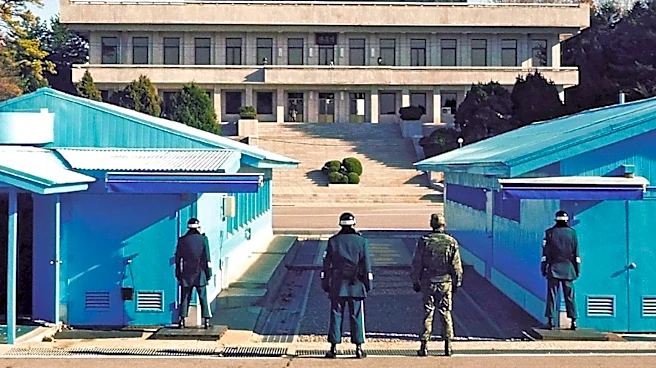
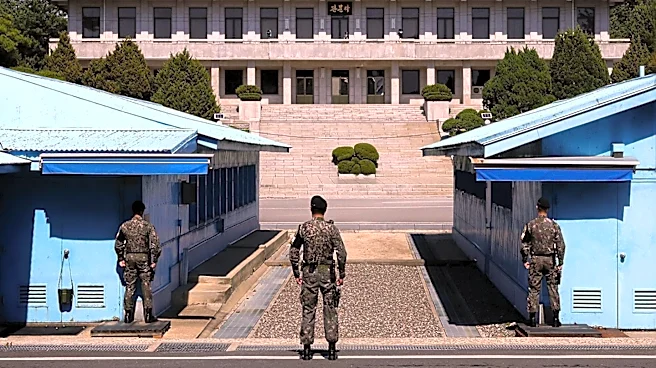
The South Korean military is contemplating moving surveillance equipment closer to the military demarcation line (MDL) due to an increase in North Korean fortification work and repeated crossings by North Korean troops. Military sources indicate that
defense authorities are evaluating the installation of additional surveillance assets, such as thermal observation devices, in areas where dense vegetation or mountainous terrain obstructs visibility. This move is a response to North Korea's accelerated fortification efforts along the MDL, which have created new paths for troop movement. The South Korean Joint Chiefs of Staff stated that the military is implementing operational measures and reinforcing capabilities. The concern is that these frequent crossings increase the likelihood of warning shots, making better intelligence crucial to minimize misunderstandings and ensure troop safety.
Why It's Important?
This development is significant for regional security and the stability of the Korean Peninsula. The increased proximity of surveillance equipment and potentially troops from both sides raises the risk of accidental clashes or escalations along the highly sensitive border. North Korea's fortification work and increased crossings are seen as part of a doctrine recasting inter-Korean relations as hostile, which could further destabilize the region. For the U.S., as a key ally of South Korea, this situation necessitates close monitoring and potential strategic adjustments. Any escalation could draw the U.S. into a conflict, impacting its military presence and diplomatic efforts in the Indo-Pacific. The need for enhanced intelligence gathering by South Korea underscores the ongoing challenges in managing the volatile relationship with North Korea and maintaining deterrence.
What's Next?
The South Korean military will continue to assess and decide on the precise measures for deploying additional surveillance equipment, with troop safety being a primary consideration. Consultations with the United Nations Command (UNC), which oversees the 1953 Armistice Agreement, will be necessary, as installing new equipment requires its consent. The UNC is actively monitoring activities within the Demilitarized Zone (DMZ). The potential for North Korea to move armed guard troops further south as fortification work progresses means that any South Korean advance would bring the two sides into closer proximity, increasing the need for careful coordination and de-escalation mechanisms. The ongoing fortification work and increased crossings by North Korean troops suggest a continued period of heightened tension along the border.
Beyond the Headlines
Beyond the immediate military implications, this situation reflects the deeper, unresolved geopolitical tensions on the Korean Peninsula. The increased activity along the MDL highlights the fragility of the armistice and the persistent threat of miscalculation. It also underscores the challenges of maintaining peace and security in a region where two states remain technically at war. The South Korean military's consideration of advanced surveillance technology points to a broader trend of technological arms races in contested zones, where intelligence gathering and early warning systems are paramount. This development could also influence international perceptions of North Korea's intentions and potentially impact future diplomatic efforts, as the physical manifestations of hostility on the border contradict any rhetoric of peaceful coexistence.