


What's Happening?
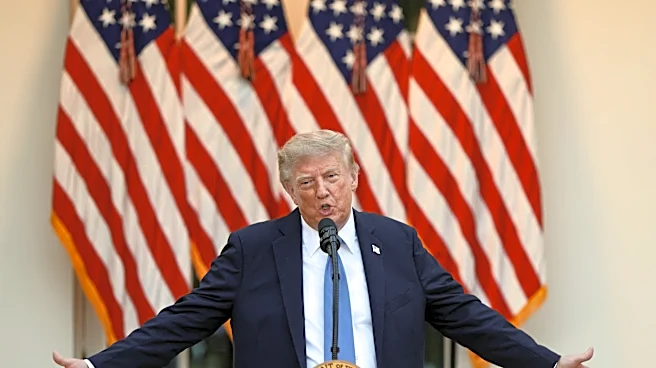
President Trump is actively working to rally his base and influence the upcoming midterm elections by making the election a referendum on his record, despite not being on the ballot himself. He is scheduled to deliver keynote addresses on both nights
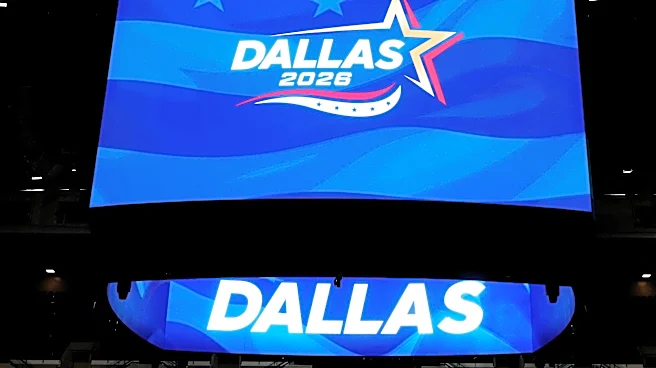
of a Republican convention in Dallas. This event, largely conceived and planned by President Trump, aims to energize Republican voters and support vulnerable lawmakers. His message has focused on promoting his administration's achievements, including border security, tax reductions for workers and seniors, and efforts to lower prescription drug prices. The Republican Party is aligning with this strategy, with House Speaker Mike Johnson noting the convention's importance. However, some Republicans are skipping the event to focus on their local campaigns, and the convention will compete with the NFL season kickoff for viewership.
Why It's Important?
This strategy is crucial for the Republican Party as it navigates political headwinds typically faced by the party in power during midterm elections. President Trump's involvement aims to counter his declining approval ratings and voter dissatisfaction with the economy, which have made several Senate races more competitive than anticipated. The outcome of these midterms will significantly impact President Trump's agenda and his ability to fill administrative and judicial positions for the remainder of his term, as the Senate holds confirmation power. The focus on his record and the attempt to make the election about him could either galvanize his supporters or further energize the opposition, depending on how voters perceive his influence and the relevance of his past policies to current economic concerns like inflation and the war in Iran. The substantial spending by political organizations like MAGA Inc. in key races, such as the Texas Senate race, highlights the high stakes involved.
What's Next?
The immediate next steps involve the Republican convention in Dallas, where President Trump's speeches and the appearances of other Republican figures will aim to generate momentum. Following the convention, the focus will shift to the final weeks leading up to Election Day on November 3. President Trump has indicated he will make numerous stops in the last 30 days to campaign for Republican candidates. The effectiveness of his strategy will be tested by voter turnout and the ability of Republican candidates to translate his support into votes. The financial investments by PACs like MAGA Inc. will continue to play a role in advertising and voter mobilization. The results of the midterm elections will ultimately determine the extent of President Trump's influence on the legislative landscape and the balance of power in Congress for the remainder of his term.
Beyond the Headlines
The convention and President Trump's active role underscore a deeper trend in American politics: the personalization of elections, even when the president is not directly on the ballot. By urging voters to 'pretend' he is on the ballot, President Trump is attempting to transform midterm elections, traditionally focused on local and congressional issues, into a national referendum on his leadership and policies. This approach could further entrench partisan divisions and make it challenging for individual candidates to differentiate themselves from the national political narrative. The mixed reactions from within the Republican Party, with some candidates embracing his spotlight and others opting to focus on local campaigning, reveal the ongoing tension between loyalty to President Trump and the need for independent political viability. The long-term implications could include a continued shift towards presidentialized midterm elections, where the incumbent president's popularity and policies heavily influence outcomes across the country, regardless of local dynamics.