






What's Happening?
President Trump, following his 80th birthday celebration at the White House, took to Truth Social in the early hours to express his opposition to renewing the Foreign Intelligence Surveillance Act (FISA) unless it includes his proposed Save America Act.
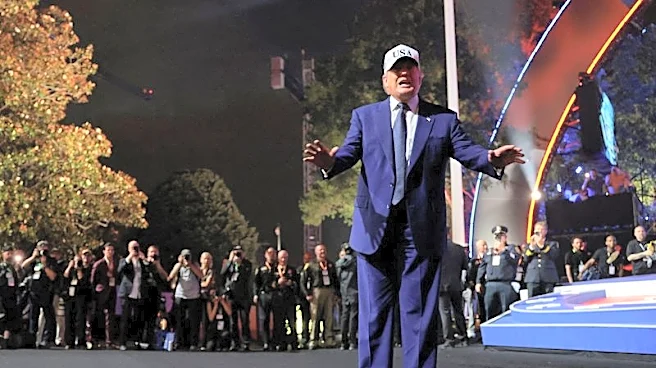
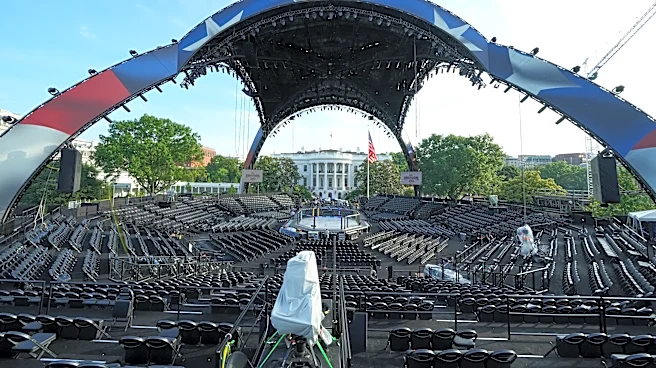
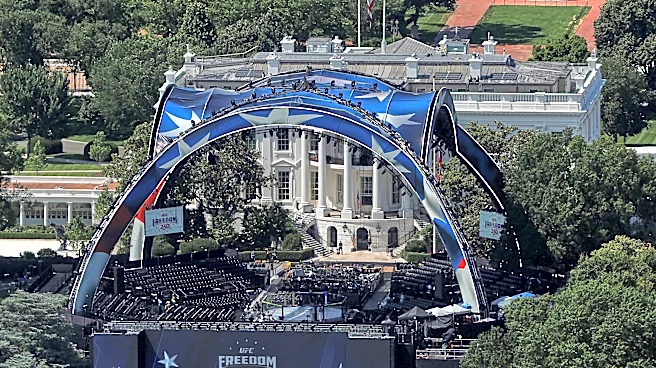
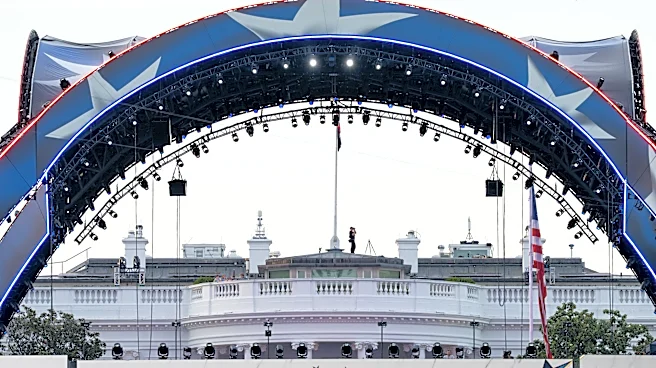
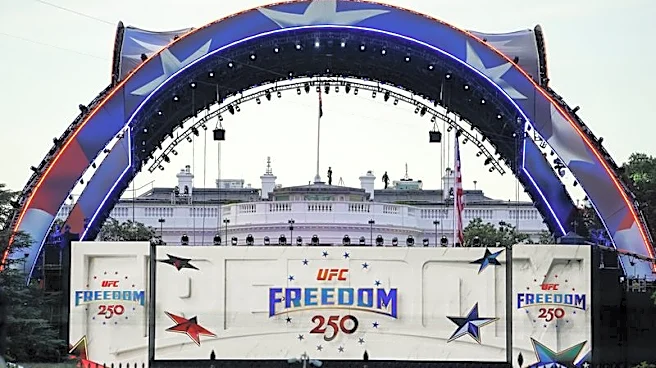
This act, which has stalled in Congress, includes measures such as requiring proof of citizenship for voter registration and largely banning mail-in ballots. Trump's post, made at 3:57 a.m., criticized 'Dumocrats' for their support of FISA, referencing its use during the 2016 Russiagate investigation. The House of Representatives recently voted against extending FISA, with concerns about its potential to inadvertently access private information of Americans. Trump also praised the UFC event held at the White House, despite forecasts of bad weather, and criticized weather predictions.
Why It's Important?
The renewal of FISA is a significant issue as it involves surveillance powers used by U.S. intelligence agencies to monitor foreign individuals deemed national security risks. Trump's insistence on tying FISA renewal to the Save America Act highlights ongoing political tensions over election security and surveillance. The act's provisions, such as banning transgender women from women's sports and prohibiting gender-affirming surgeries for minors, reflect broader cultural and political debates. The rejection of FISA's extension by the House, with bipartisan opposition, indicates a shift in legislative priorities and concerns over privacy and civil liberties. Trump's actions and statements continue to influence the political landscape, particularly regarding election integrity and national security.
What's Next?
The future of FISA and the Save America Act remains uncertain. With the House rejecting the FISA extension, there may be further negotiations or legislative efforts to address privacy concerns while maintaining national security measures. Trump's push for the Save America Act suggests he will continue to advocate for its provisions, potentially influencing upcoming elections and legislative agendas. The political dynamics surrounding these issues could lead to further debates and divisions within Congress, impacting future policy decisions.