




What's Happening?
Prediction market platforms, such as Kalshi and Polymarket, which allow individuals to wager on political outcomes and policy decisions, are experiencing a surge in popularity. This growth has prompted ethics experts and some lawmakers in Pennsylvania
to voice concerns about the potential for corruption and insider trading. While Pennsylvania's existing ethics law prohibits public officials from using information gained through their positions for financial gain, there is no specific ban on insider prediction market betting for public employees. Governor Josh Shapiro's office and the General Assembly currently refer to the general ethics law when questioned about policies on this issue. The State Ethics Commission has stated it would investigate any complaints alleging violations through prediction market participation. The Anti-Corruption Data Collective in Washington has observed a significant increase in political prediction markets, with nearly 16 times more markets for the 2026 midterms nationwide compared to 2024. This rise in activity, coupled with the lack of specific regulations, has led to calls for clearer guidelines to prevent potential abuses.
Why It's Important?
The proliferation of political prediction markets in Pennsylvania and across the U.S. raises significant questions about the integrity of democratic processes and public trust. The absence of specific regulations for public employees betting on political outcomes creates a loophole where insider information could be exploited for personal financial gain, potentially influencing public perception of elections and policy debates. Michael Hornsby, co-director of the Anti-Corruption Data Collective, highlights that a small number of professional traders can sway market odds, which are increasingly cited by major media outlets, thus potentially misrepresenting public sentiment. This could lead to a decline in public confidence in government and electoral fairness. Furthermore, a legal battle is ongoing between 20 states and the federal government regarding the authority to regulate and tax these markets. States, including Pennsylvania, could be losing out on substantial tax revenue if prediction markets are not classified as gambling and subjected to state-level taxation, impacting public services and budgets.
What's Next?
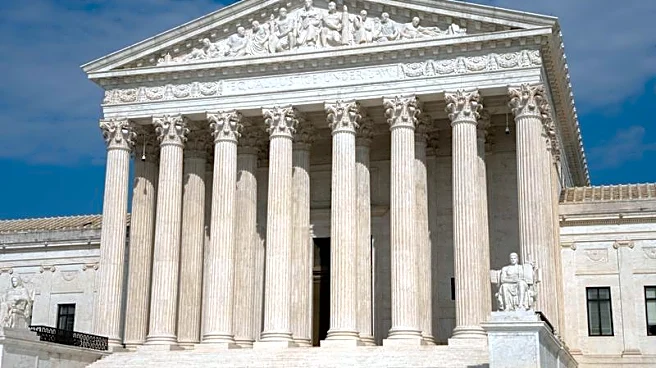
The debate over regulating political prediction markets in Pennsylvania is expected to intensify. State Senator Lindsey Williams is considering proposing legislation to ban insider trading on prediction markets for state public employees, similar to a resolution she introduced for federal employees. State House Democrats, including State Representatives Danilo Burgos and Tarik Khan, have already introduced bills aimed at giving the Pennsylvania Gaming Control Board oversight of prediction markets, implementing taxes, and enhancing consumer protections. These legislative efforts, if advanced, could lead to Pennsylvania joining other states in a legal challenge against the federal government's stance on prediction market regulation. The federal appeals court recently sided with states on a related issue, suggesting the matter may ultimately reach the U.S. Supreme Court. Meanwhile, the State Treasury has strengthened its internal policy banning employees from using insider information on prediction markets, and Governor Shapiro's campaign has a rule against staff betting on elections. The outcome of these legislative and legal battles will determine the future of political prediction markets and their regulation in Pennsylvania and potentially nationwide.
Beyond the Headlines
The rise of political prediction markets touches upon deeper ethical and societal implications beyond immediate regulatory concerns. The ability to bet on political events, especially with insider knowledge, blurs the lines between civic engagement and financial speculation, potentially commodifying democratic processes. This trend could foster a transactional view of politics, where outcomes are seen as opportunities for profit rather than reflections of public will. The concern that a few high-volume traders can influence market odds, which are then reported by media, suggests a potential for manipulation of public opinion and the narrative surrounding political contests. This raises questions about the role of information in a democracy and the potential for financial incentives to distort political discourse. The ongoing legal dispute between states and the federal government over regulatory authority also highlights a broader tension in U.S. governance regarding emerging digital platforms and the balance of power between state and federal oversight in areas like gambling and financial markets. The long-term impact could be a redefinition of what constitutes political participation and the ethical boundaries of engaging with political information.