







What's Happening?
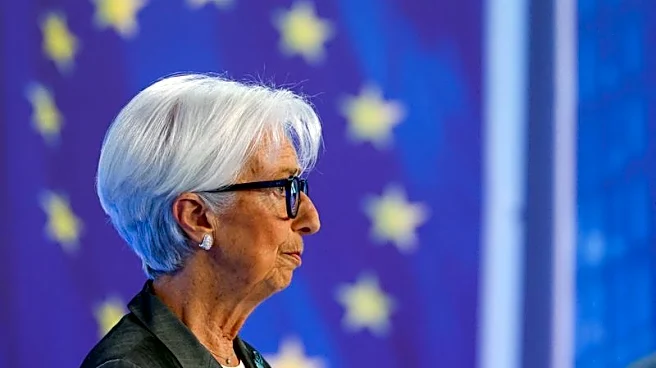
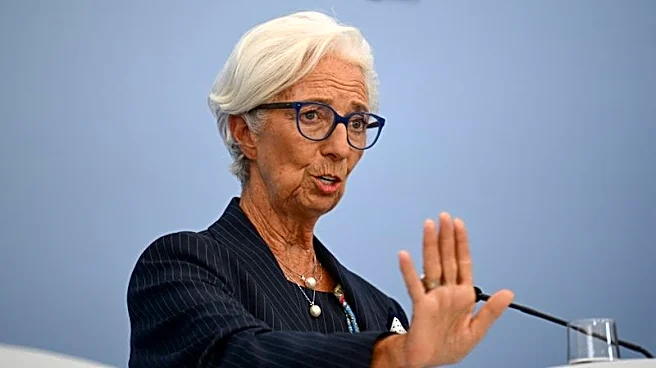
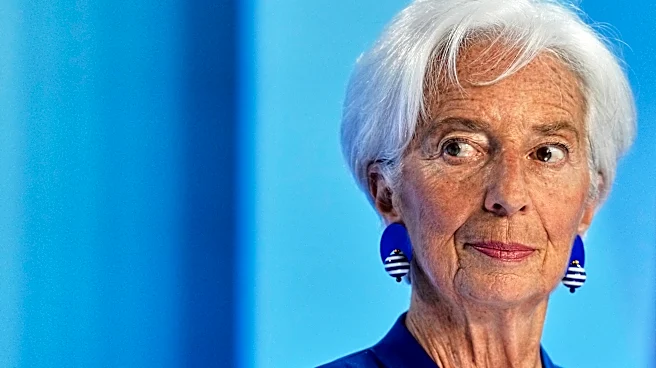
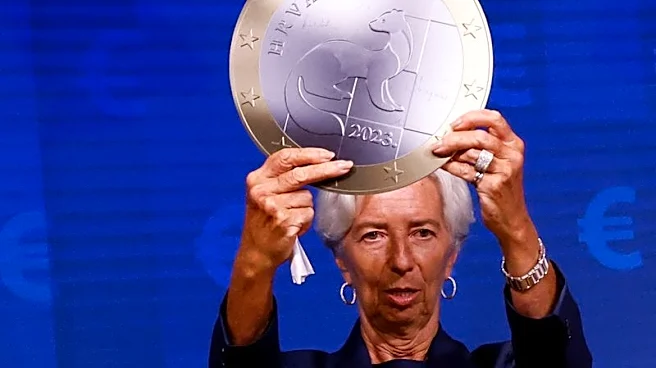
European Central Bank (ECB) President Christine Lagarde announced on October 29, 2026, that she will step down from her position on February 7, 2027, approximately nine months before her term was officially set to end on October 31, 2027. Lagarde stated
that the 'neutrality' required of a central bank president is the 'price of independence,' and she no longer believes she can remain neutral. This early departure is seen as a move to gain 'greater freedom to express her views' and potentially engage in non-monetary matters, including a possible role in the French presidential race. Her decision comes amidst a turbulent period for the eurozone, marked by ongoing inflation concerns and geopolitical events. Lagarde also addressed speculation regarding bandages on her face, clarifying in an internal video message to ECB staff that they were due to a 'small surgery' for skin cancer and urged regular skin checks. The ECB did not disclose her immediate plans following her departure.
Why It's Important?
Lagarde's early departure from the ECB has significant implications for the eurozone and global financial markets. Her decision to prioritize 'greater freedom to express her views' suggests a potential shift from the constrained role of a central bank head to a more politically active one, possibly influencing the upcoming French presidential election. This move could introduce an element of uncertainty into European politics, especially given the current political landscape. For the ECB, the search for a successor will be critical, as the new president will inherit the challenge of balancing inflation control with economic stability amid rising energy prices and geopolitical tensions. The market's reaction to her departure, while initially unfazed, will likely be influenced by the selection of her successor, particularly concerning their stance on monetary policy and fiscal stability across the eurozone. Her tenure was marked by navigating the COVID-19 pandemic, the war in Ukraine, and significant inflation, demonstrating the critical role of the ECB's leadership in times of crisis.
What's Next?
The European Council will now initiate the process to appoint Lagarde's successor, following recommendations from the Eurogroup and consultations with the European Parliament and the ECB Governing Council. This process is expected to begin immediately, with European Council President Antonio Costa stating that it will proceed without delay. Potential candidates being mentioned include Pablo Hernández de Cos, Klaas Knot, and Joachim Nagel, each with different monetary policy leanings that could influence the ECB's future direction. The timing of her departure, ahead of the French presidential election in April 2027, allows current European Council members, including French President Emmanuel Macron, to participate in the selection of her successor. The market will closely monitor the selection process, as the choice of the next ECB president will impact the euro exchange rate, French government bond yields, and the overall approach to managing inflation and economic growth in the eurozone.
Beyond the Headlines
Lagarde's career has been characterized by breaking barriers, being the first female chair of Baker McKenzie, the first female finance minister in the G8, and the first female head of both the IMF and the ECB. Her emphasis on diversity as a risk management issue, stemming from her own experiences in male-dominated fields, highlights a broader shift in leadership perspectives within global financial institutions. Her candidness about her skin cancer diagnosis also underscores the importance of public health awareness, even among high-profile figures. The stated reason for her early departure—the desire to no longer remain 'neutral'—suggests a potential re-evaluation of the role of central bank leaders in broader societal and political discourse. This could set a precedent for future leaders to engage more openly on issues beyond their immediate mandates, potentially blurring the lines between technocratic leadership and political advocacy.