


What's Happening?
NATO is evaluating measures to bolster its Arctic security in response to escalating claims by President Trump regarding Greenland. During a closed-door meeting in Brussels, NATO ambassadors discussed reinforcing the Arctic region by enhancing intelligence
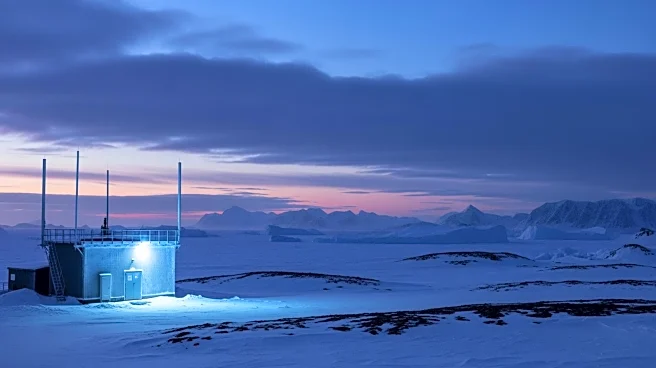
capabilities, increasing defense spending, and conducting more military exercises. The U.S. has cited concerns over Russian and Chinese influence in the area as justification for its interest in Greenland. However, experts largely dispute these claims, noting that Moscow and Beijing's military focus is primarily in the eastern Arctic. The meeting aimed to avoid direct confrontation, with Denmark emphasizing the issue as a bilateral matter and highlighting NATO's Arctic strategy successes.
Why It's Important?
The discussions within NATO reflect growing concerns about the U.S.'s intentions in Greenland and the potential impact on transatlantic relations. The Arctic region is strategically significant due to its natural resources and geopolitical position. Any military escalation or territorial claims could destabilize the region and strain alliances. The U.S.'s stance on Greenland may also influence NATO's strategic priorities and resource allocation. The situation underscores the importance of maintaining diplomatic channels and cooperative security measures to address emerging threats and preserve regional stability.
What's Next?
NATO is expected to develop options for enhancing Arctic security, which will be presented to member states for consideration. The alliance may increase its focus on intelligence gathering and military readiness in the region. Diplomatic efforts will likely continue to address the U.S.'s claims and seek a resolution that maintains alliance cohesion. The situation may also prompt discussions within the European Union and other international forums to ensure a coordinated response to potential security challenges in the Arctic.