





What's Happening?
The National Forest Foundation, in collaboration with the U.S. Forest Service, is implementing forest-thinning projects across the Boise and Payette National Forests in Southwest Idaho. This initiative aims to mitigate wildfire risk by removing dense
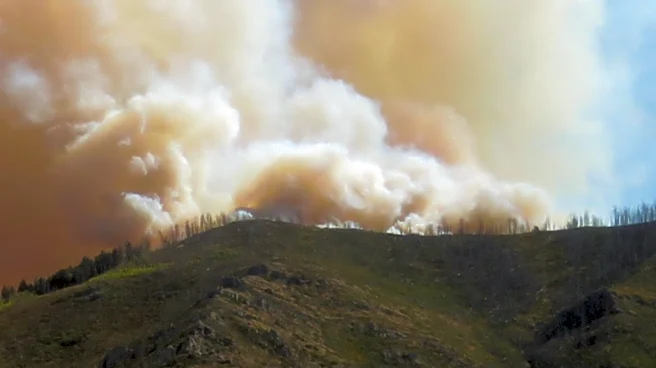
vegetation, which can accelerate fire spread and intensity. Josh Rodriguez, Intermountain Program Manager with the National Forest Foundation, emphasized that proactive forest management is a more cost-effective approach than post-wildfire suppression and community rebuilding. A 2022 U.S. Forest Service analysis identified Southwest Idaho as one of the top ten most fire-prone regions within the National Forest System. Over the next decade, crews will focus on reducing fuel loads across approximately 150,000 acres of high-priority forestland. The work involves removing smaller trees and 'ladder fuels' that allow flames to climb into the crowns of larger trees, thereby keeping fires closer to the ground and making them easier to control. After thinning, the treated areas feature a more open understory, promoting healthier growth for established trees and reducing the risk of high-intensity crown fires. Cut logs and limbs are gathered into burn piles, left to dry for several years, and then burned by the Forest Service during off-seasons.
Why It's Important?
These forest-thinning projects are crucial for protecting communities and ecosystems in Southwest Idaho, a region identified as highly susceptible to wildfires. By reducing fuel loads, the initiative aims to prevent catastrophic high-intensity wildfires, which can devastate natural habitats, destroy property, and endanger lives. The economic impact of these proactive measures is significant, as they are considerably cheaper than the extensive costs associated with wildfire suppression and the subsequent rebuilding of affected communities. Furthermore, healthier forests resulting from thinning operations are more resilient to future fire events and can better support biodiversity. The collaboration between the National Forest Foundation and the U.S. Forest Service highlights a strategic shift towards preventative land management, acknowledging the increasing threat of wildfires due to climate change and historical forest management practices. This approach also contributes to the long-term ecological health of national forests, ensuring their continued ability to provide essential ecosystem services.
What's Next?
Over the next decade, crews will continue to implement forest-thinning projects across 150,000 acres of high-priority forestland in the Boise and Payette National Forests. The ongoing effort involves multiple agencies and conservation groups working together to prepare and protect both public and private lands for future fire seasons. The burn piles created from the thinning operations will be left to dry for a few years before being burned by the Forest Service during designated off-seasons, further reducing fuel accumulation. The success of these projects will likely influence future forest management strategies in other fire-prone regions across the U.S., potentially leading to the expansion of similar proactive measures. Continued monitoring of the treated areas will be essential to assess the long-term effectiveness of these thinning efforts in reducing wildfire intensity and promoting forest health.
Beyond the Headlines
The emphasis on proactive forest management in Southwest Idaho reflects a broader national conversation about adapting to and mitigating the impacts of climate change, particularly the increasing frequency and severity of wildfires. This initiative underscores the shift from solely reactive fire suppression to a more holistic approach that includes ecological restoration and community protection. The concept of 'ladder fuels' highlights a critical aspect of fire behavior that is often overlooked, demonstrating how seemingly minor vegetation can significantly influence a fire's destructive potential. The long-term drying and burning of collected debris also points to the complex, multi-year planning required for effective forest management. This collaborative model between government agencies and non-profit organizations could serve as a blueprint for addressing similar environmental challenges nationwide, fostering a more integrated and sustainable approach to land stewardship.