


What's Happening?
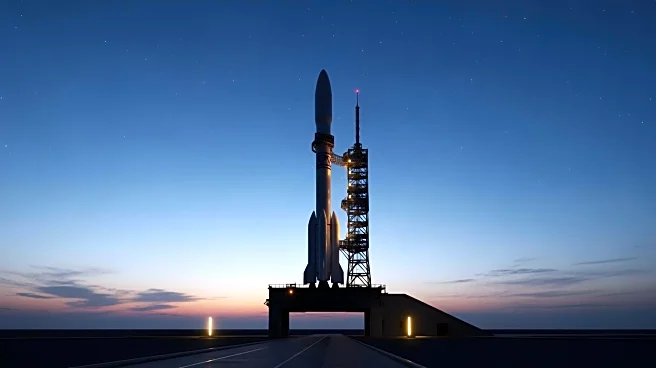
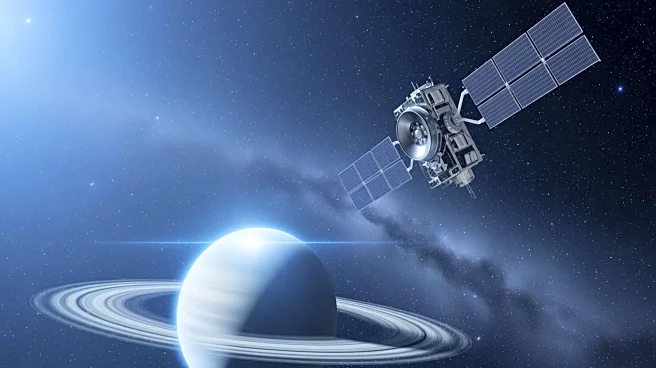
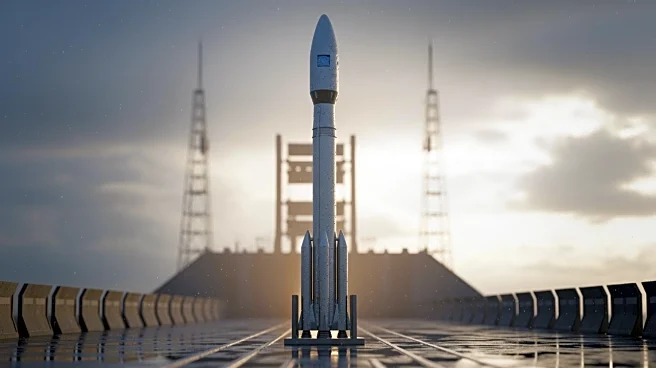
NASA has launched the Pandora mission, a small satellite designed to study the atmospheres of at least 20 exoplanets and the activity of their host stars. The launch took place from Space Launch Complex 4 East at Vandenberg Space Force Base in California
as part of SpaceX's Twilight commercial rideshare mission. Pandora will enter a sun-synchronous orbit, allowing it to pass over the same spot on Earth at the same time each day, minimizing light variations. The mission aims to differentiate chemical fingerprints in the light from planetary atmospheres and their host stars, using a near-infrared detector originally developed for the James Webb Space Telescope. Pandora's observations will enhance the Webb Telescope's ability to distinguish planetary atmospheres from stellar activity.
Why It's Important?
The Pandora mission represents a significant step forward in exoplanet research, providing critical data that could help scientists understand the conditions necessary for life beyond Earth. By analyzing the chemical compositions of exoplanet atmospheres, researchers can identify elements and molecules like water and oxygen, which are essential for life. This mission also supports NASA's broader goals of exploring the universe and understanding the potential for life on other planets. The data collected by Pandora will not only advance scientific knowledge but also improve the capabilities of existing space telescopes like the James Webb Space Telescope, enhancing their ability to study distant worlds.
What's Next?
Following the successful launch, Pandora will begin its mission of collecting data on exoplanetary atmospheres. The satellite will conduct long-duration observations, collecting visible and infrared light from each target system multiple times. This data will be analyzed to separate the signals from planets and stars, providing insights into the origins of various elements and molecules. The mission is expected to contribute to future exoplanet exploration efforts and inform the development of new technologies and methodologies for studying distant celestial bodies.