




What's Happening?
The Supreme Court's recent decision in Louisiana v. Callais has significantly weakened the Voting Rights Act, leading to a rollback of Black political representation in the South. This ruling allows Southern states to redraw district maps, potentially
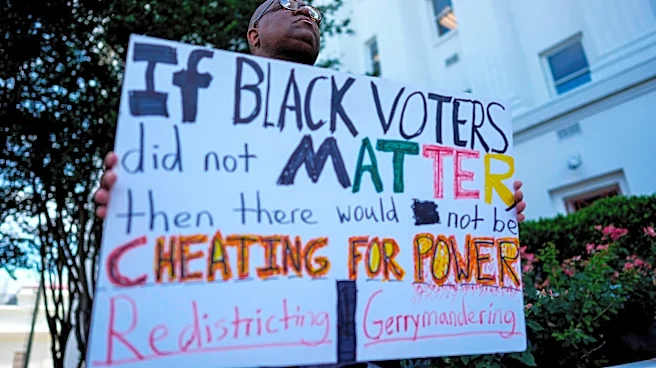
eliminating Black-majority districts and replacing them with white-majority ones. States like Alabama, Louisiana, and Tennessee are already moving forward with plans to eliminate Black-majority seats. This decision is seen as a major setback for Black and Latino representation in various elected offices across the South, reminiscent of the Jim Crow era. The ruling has sparked criticism from civil rights advocates and Democratic lawmakers, who view it as a regression to past racial injustices.
Why It's Important?
The Supreme Court's decision has profound implications for racial equality and political representation in the United States. By allowing states to redraw district maps without considering racial impacts, the ruling threatens to diminish the political power of Black and Latino communities. This could lead to a significant reduction in minority representation in state legislatures and other elected bodies, affecting policy decisions and resource allocation. The decision also raises concerns about the erosion of civil rights protections and the potential for increased racial polarization in American politics. The rollback of Black representation could undermine decades of progress made since the Civil Rights Movement.
What's Next?
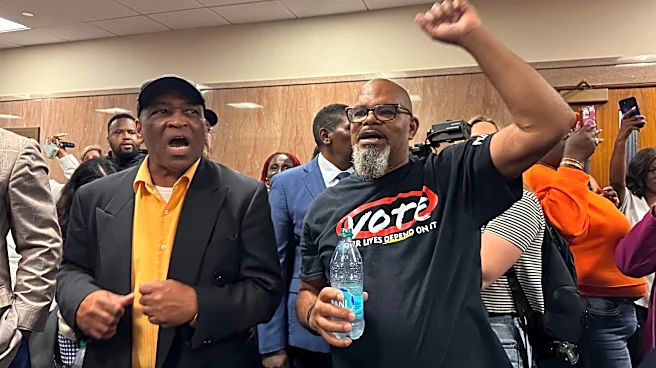
In response to the Supreme Court's decision, civil rights groups and Democratic lawmakers are mobilizing to challenge the redistricting efforts in court and through public protests. There are plans for mass mobilizations and voter registration drives across the South to counteract the potential loss of Black political power. Additionally, there is growing momentum for democratic reforms to the Supreme Court to address concerns about its impact on civil rights. The outcome of these efforts will be crucial in determining the future of racial equality and political representation in the United States.