








What's Happening?
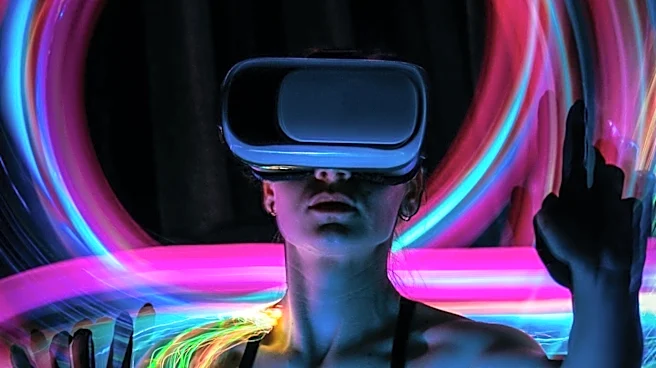
Extended Reality (XR) technology, an umbrella term encompassing augmented reality (AR), virtual reality (VR), and mixed reality (MR), is distinct from the metaverse concept. XR refers to the hardware and software that enable immersive experiences, blending
physical and digital worlds. These technologies are used for specific applications like training sessions, museum exhibitions, or brand activations, and do not require a persistent shared world. In contrast, the metaverse is envisioned as a continuous, interconnected digital universe where individuals interact as avatars, often utilizing XR as an access layer. While XR delivers measurable outcomes in current applications, the metaverse remains a longer-term, more speculative ambition. Most organizations currently investing in immersive technology are focusing on deployable XR applications with clear objectives rather than large-scale metaverse infrastructure.
Why It's Important?
The distinction between XR and the metaverse is crucial for investment decisions and strategic planning in the technology sector. XR offers immediate, tangible benefits across various industries, including education, healthcare, cultural heritage, retail, and marketing. Its applications provide experiential learning, enhanced training simulations, and engaging brand encounters, leading to measurable outcomes. Conversely, the metaverse, while promising a future of persistent virtual interaction, is still in its nascent stages with less defined practical applications and significant infrastructure requirements. Understanding this difference helps businesses and developers allocate resources effectively, focusing on technologies that provide current value while monitoring the evolving landscape of broader digital universes. This clarity prevents misallocation of funds into speculative ventures when more immediate and impactful immersive solutions are available through XR.
What's Next?
The continued development and adoption of XR technologies are expected to expand across various sectors. As hardware becomes more accessible and sophisticated, from smartphones for AR to advanced headsets for VR and MR, the integration of immersive experiences into daily life and professional environments will likely increase. AI is also transforming XR, enabling more dynamic and responsive environments that adapt to user interactions, leading to personalized experiences in education, marketing, and social impact initiatives. For the metaverse, the path forward involves significant technological advancements and standardization to create a truly interconnected and persistent digital universe. While organizations will continue to invest in XR for immediate returns, research and development into metaverse infrastructure will likely progress, albeit with a longer time horizon for widespread adoption and clear monetization models.
Beyond the Headlines
The evolving relationship between XR and the metaverse raises deeper questions about the future of human interaction, digital identity, and economic models. As XR becomes more integrated, it could reshape how we learn, work, and socialize, blurring the lines between physical and digital realities. The metaverse, if fully realized, could create entirely new economies, social structures, and forms of governance within virtual spaces. Ethical considerations regarding data privacy, digital ownership, and the psychological impact of prolonged immersion will become increasingly prominent. The development of these technologies also highlights a broader societal shift towards more immersive and interactive digital experiences, potentially leading to new forms of entertainment, education, and community building, while also posing challenges related to digital divide and equitable access.