





What's Happening?
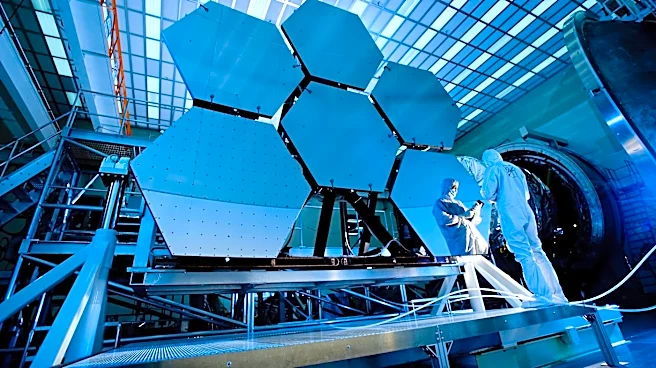
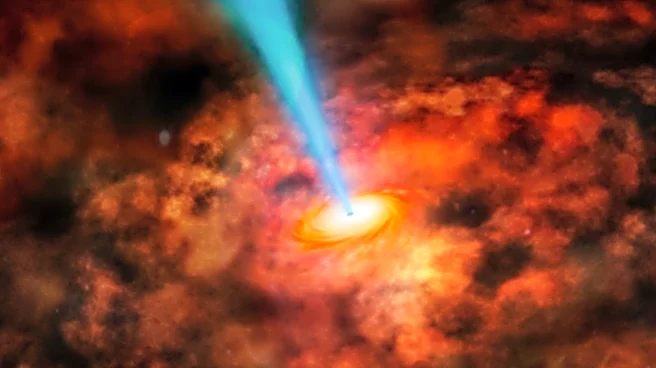
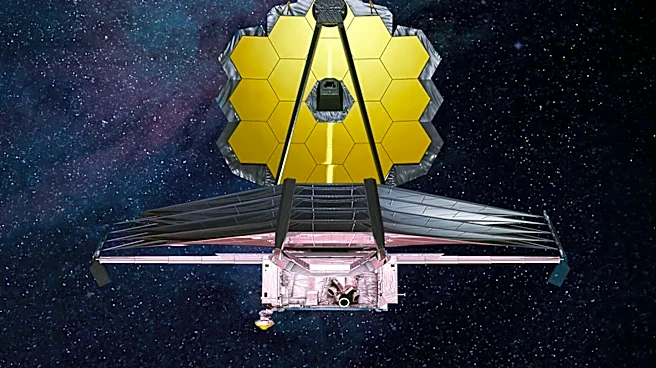
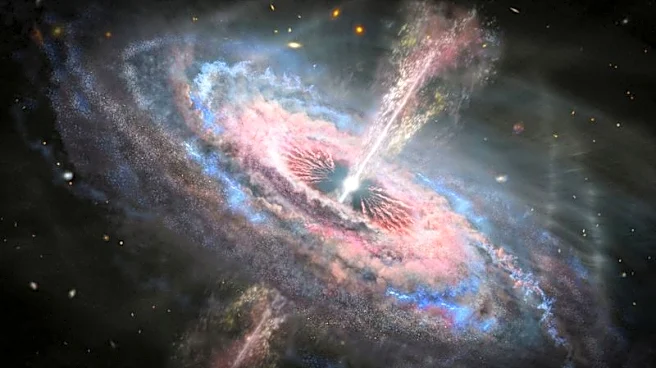
Astronomers have identified a supermassive black hole, named RBH-1, that appears to have been ejected from its galaxy and is now moving through space at nearly 1,000 kilometers per second. This discovery was made using the James Webb Space Telescope,
which detected a thin streak of gas and young stars trailing the black hole. The streak, approximately 200,000 light-years long, indicates the black hole's path. This is the first confirmed case of a runaway supermassive black hole, a phenomenon predicted by astronomers for decades but never conclusively observed until now.
Why It's Important?
The detection of RBH-1 provides crucial evidence supporting theories that supermassive black holes can be ejected from their host galaxies. This finding has significant implications for understanding galaxy dynamics and the evolution of black holes. It also raises questions about the frequency of such events and their impact on the surrounding interstellar medium. The ability to observe and measure the motion of such massive objects enhances our understanding of gravitational interactions and the forces at play in the universe.
What's Next?
Further observations and studies will aim to determine the exact mechanism that led to RBH-1's ejection. Researchers will also look for additional runaway black holes to understand how common these events are. The upcoming wide-field space telescopes, such as the Euclid and the Nancy Grace Roman Space Telescope, are expected to play a crucial role in identifying more such phenomena. These efforts will contribute to a more comprehensive understanding of galaxy formation and the role of black holes in shaping the cosmos.