
What's Happening?
The Haryana Anti-Terrorist Squad (ATS) has arrested two additional individuals, Balwinder Singh and Sukhwinder Singh, in connection with an international narco-terror network. These arrests, made on November
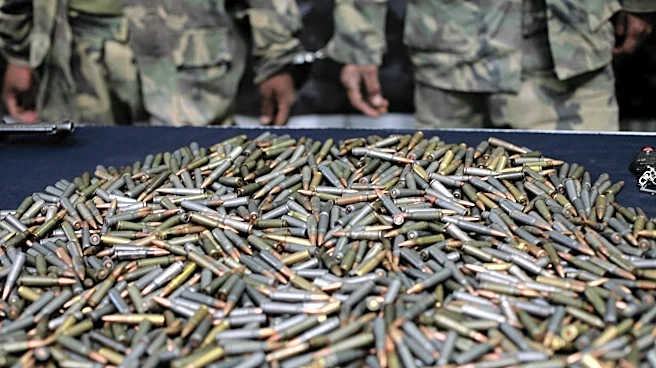
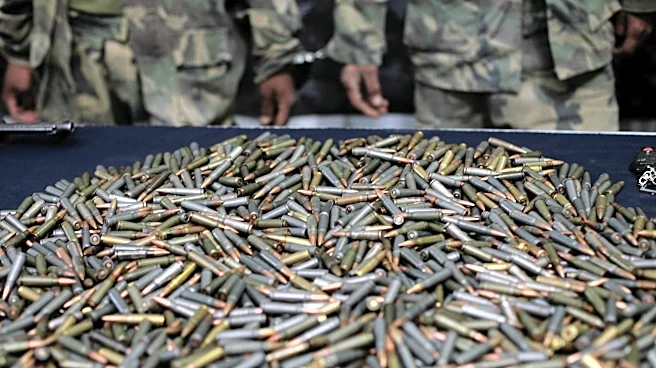
14, bring the total number of individuals apprehended in this case to nine. The investigation originated from a club firing incident in Panchkula on September 13, which subsequently uncovered the broader international network. Authorities suspect that handlers operating from abroad, particularly the U.S., are coordinating the network's activities, providing logistical support for narcotics and weapons transported via drones. During earlier arrests, police recovered vehicles, illegal pistols, heroin, and cash-counting machines, which have provided crucial leads. The ATS is actively investigating the supply chain, financial trails, and international contacts of the accused to dismantle the network.
Why It's Important?
This case highlights the increasing complexity and international reach of criminal organizations involved in drug trafficking and terrorism. The alleged involvement of handlers operating from the U.S. underscores the transnational nature of these threats and the challenges faced by law enforcement agencies in combating them. The use of drones for transporting narcotics and weapons indicates a sophisticated operational methodology, posing significant security concerns. The dismantling of such networks is crucial for disrupting the flow of illegal drugs and weapons, which can fuel other criminal activities and destabilize regions. The financial trails and international contacts being investigated could reveal deeper connections and broader implications for global security and law enforcement cooperation.
What's Next?
The arrested individuals, Balwinder Singh and Sukhwinder Singh, have been granted five days of police remand for interrogation. Authorities will use this period to ascertain their specific roles within the network, identify other associates, trace the sources of weapons and narcotics supply, and uncover further details of the criminal operation. The police are also analyzing mobile phones and other technical evidence to identify additional network members and establish their respective roles. The investigation is expected to expand as the ATS continues to probe the entire supply chain, financial trails, and international contacts, aiming to fully dismantle the network and apprehend all involved parties.
Beyond the Headlines
The emergence of an international narco-terror network with alleged U.S.-based handlers raises critical questions about the effectiveness of existing international cooperation mechanisms in combating organized crime. The use of the term 'narco-terror' itself signifies a blurring of lines between drug trafficking and terrorism, suggesting a more complex threat landscape. This case could prompt a re-evaluation of intelligence sharing protocols and joint operational strategies between countries to address these evolving threats. The potential for drones to be used for illicit cross-border activities also highlights a technological challenge that requires innovative countermeasures and regulatory frameworks to prevent their exploitation by criminal organizations.