





What's Happening?
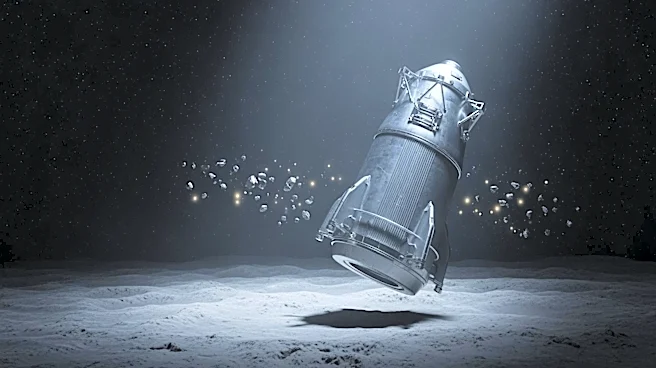
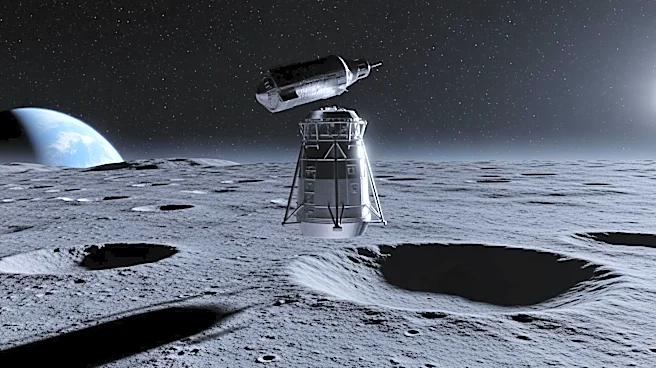
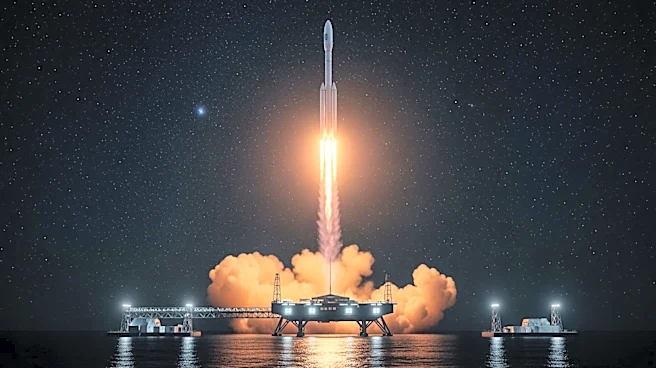
A Falcon 9 rocket stage, launched in early 2025, is projected to crash into the moon's Einstein crater on August 5, 2026. This upper stage, part of a mission that delivered the Blue Ghost and Hakuto-R landers to the moon, has been orbiting the Earth-moon
system. The Blue Ghost lander successfully touched down, while the Hakuto-R lost contact and crash-landed. The impending impact, predicted by astronomer Bill Gray, is expected to occur at a speed of 2.43 kilometers per second. Although the collision poses no risk to existing lunar infrastructure, it highlights concerns about space debris management.
Why It's Important?
The event underscores the growing issue of space debris and its potential impact on future lunar missions. As international interest in lunar exploration increases, with the U.S. and China planning more frequent missions, the management of space junk becomes crucial. The collision could offer minor scientific insights if it creates a new crater, but it also emphasizes the need for better disposal practices for used rocket stages. This incident serves as a reminder of the challenges in maintaining a sustainable space environment as lunar activities intensify.
What's Next?
With plans for increased lunar missions, both the U.S. and China aim to establish a more permanent presence on the moon. The U.S. intends to conduct annual missions starting with Artemis IV and V by 2028, while China plans to land taikonauts by 2030. This growing activity necessitates improved strategies for handling space debris to prevent potential hazards. Space agencies and companies may need to adopt practices such as sending used rocket stages into solar orbit to mitigate risks associated with space junk.