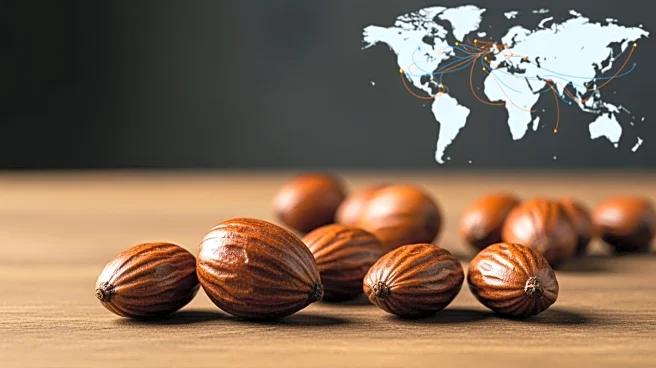

What's Happening?
The imposition of 50% tariffs by President Donald Trump on Indian goods, including fox nuts, has significantly affected the export market for this superfood. Fox nuts, also known as makhana, are popular
for their health benefits and are primarily grown in India. The tariffs have led to a doubling of prices for U.S. consumers and a 40% drop in exports to the U.S. Despite these challenges, Indian exporters are finding new markets in countries like Spain and South Africa. The domestic demand for fox nuts in India is also rising, driven by increased health awareness since the COVID-19 pandemic.
Why It's Important?
The tariffs on Indian goods, including fox nuts, highlight the broader economic tensions between the U.S. and India. For U.S. consumers, the increased prices of imported goods like fox nuts could lead to higher grocery bills. For Indian exporters, the tariffs present a challenge but also an opportunity to diversify their markets and reduce dependency on the U.S. This situation underscores the interconnectedness of global trade and the impact of political decisions on international markets. The growing domestic demand in India could also lead to increased economic activity and job creation in the agricultural sector.
What's Next?
As Indian exporters seek to mitigate the impact of U.S. tariffs, they are likely to continue exploring and expanding into new international markets. The Indian government is also supporting the fox nut industry by establishing a makhana board to enhance production and export capabilities. This could lead to increased global awareness and consumption of fox nuts. Additionally, the ongoing trade tensions may prompt further negotiations between the U.S. and India to address tariff-related issues, potentially affecting future trade policies.