
What's Happening?
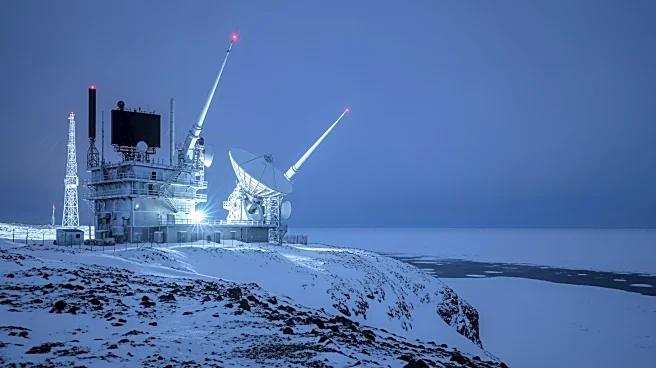
The United States has unveiled a new defense strategy that repositions its global priorities, placing less emphasis on Europe and more on Greenland and the Arctic region. This strategic shift suggests
that European allies will need to assume greater responsibility for their own defense, as the U.S. focuses on securing key territories that are vital to its homeland interests. The strategy highlights the economic and military capabilities of non-U.S. NATO members, suggesting they are well-equipped to handle regional threats. Meanwhile, Greenland is identified as a critical area for U.S. security, alongside the Panama Canal, with the Pentagon tasked with ensuring military and commercial access to these regions. This move aligns with President Trump's previous statements regarding the strategic importance of Greenland, which have raised concerns among European nations about U.S. intentions in the Arctic.
Why It's Important?
This strategic realignment reflects a significant shift in U.S. defense priorities, potentially altering the dynamics of international military cooperation. By encouraging European allies to take a more active role in their defense, the U.S. is signaling a move towards burden-sharing within NATO. This could lead to increased defense spending and military readiness among European nations. The focus on Greenland underscores the growing importance of the Arctic in global geopolitics, as climate change opens new shipping routes and access to natural resources. The U.S. aims to secure its interests in this region, which could lead to increased military presence and infrastructure development. This strategy also reinforces the Monroe Doctrine, emphasizing U.S. influence in the Western Hemisphere and potentially impacting relations with countries in the Americas.
What's Next?
As the U.S. implements this new defense strategy, European nations may need to reassess their defense policies and capabilities to meet the expectations of increased self-reliance. This could involve bolstering military budgets and enhancing regional cooperation. In the Arctic, the U.S. may pursue new military installations or partnerships to secure its interests, potentially leading to diplomatic negotiations with other Arctic nations. The emphasis on Greenland could also prompt discussions on environmental and indigenous rights, as increased military activity may impact local communities. Additionally, the U.S. will likely continue to monitor and respond to China's growing influence in the Arctic, as part of its broader strategic objectives.
Beyond the Headlines
The strategic focus on Greenland and the Arctic highlights the intersection of military strategy and environmental change. As ice melts and new resources become accessible, the region is becoming a focal point for geopolitical competition. This raises questions about the environmental impact of increased military activity and the need for sustainable development practices. The strategy also reflects broader trends in U.S. foreign policy, where economic and security interests are increasingly intertwined. The emphasis on burden-sharing within NATO may lead to a reevaluation of alliances and partnerships, as countries navigate the balance between national sovereignty and collective security.