
What's Happening?
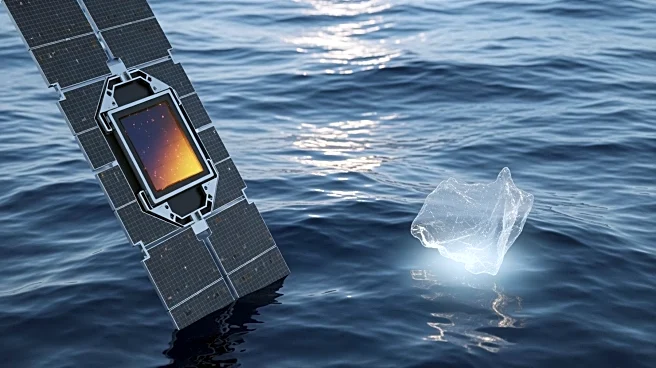
NASA has made significant strides in detecting plastic pollution on land using its Earth Surface Mineral Dust Source Investigation (EMIT) sensor, which is aboard the International Space Station. This technology,
initially designed to map minerals across desert regions, has now been adapted to identify plastic compounds in landfills and large-scale structures. The success of this technology on land has inspired marine researchers to explore its potential for tracking ocean debris. A key development in this effort is the creation of a spectral library by NASA intern Ashley Ohall, which contains nearly 25,000 molecular 'fingerprints' of various debris types, including plastics. This library is crucial for future sensor generations to effectively identify and track marine litter.
Why It's Important?
The ability to detect and map plastic pollution from space represents a major advancement in environmental monitoring. With an estimated 8 million tons of plastic entering the oceans annually, traditional methods like net dragging are insufficient for quantifying the vast amounts of marine debris. NASA's technology could revolutionize how scientists monitor and address ocean pollution, providing more accurate data to inform policy and conservation efforts. This development is particularly significant for coastal communities and ecosystems that are directly impacted by plastic pollution. By improving detection capabilities, NASA's work could lead to more effective strategies for reducing plastic waste and protecting marine environments.
What's Next?
The next steps involve refining the technology to overcome challenges such as seawater's absorption of infrared light, which currently masks many of plastic's spectral features. Researchers are also training artificial intelligence tools to enhance the analysis of satellite imagery. As these technologies advance, they could be deployed more widely to monitor ocean pollution in real-time. This progress may prompt increased collaboration between international space agencies, environmental organizations, and governments to tackle the global issue of plastic pollution. Continued innovation in this area could lead to new policies and initiatives aimed at reducing plastic waste and mitigating its impact on marine life.