

What's Happening?
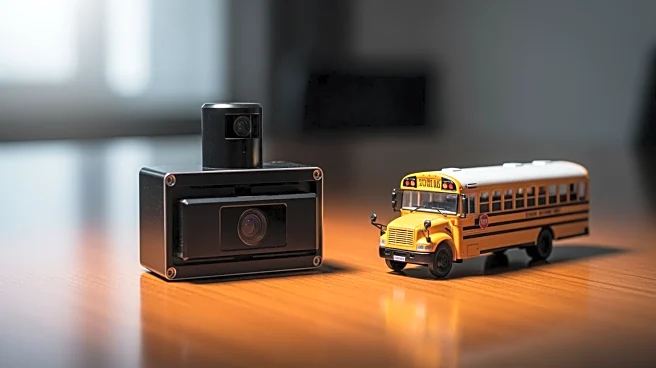
Federal investigators have initiated a probe into Waymo following an incident where one of its autonomous vehicles illegally passed a stopped school bus in Austin, Texas. The event occurred on January 12, 2026, involving a 2024 Jaguar I-Pace sport utility
vehicle equipped with an Automated Driving System (ADS) and operated by Waymo LLC. The vehicle, while operating autonomously, stopped and queried its human safety operator about the presence of a school bus with active signals. The remote operator incorrectly advised that there were no active signals, leading the vehicle to proceed illegally. This incident highlights a critical failure in the 'human-in-the-loop' system, where the human operator's error resulted in a safety violation. The National Transportation Safety Board (NTSB) is examining the circumstances surrounding this event as part of a broader investigation into safety practices within Waymo's autonomous fleet.
Why It's Important?
The investigation into Waymo underscores significant concerns about the safety and reliability of autonomous vehicle technology, particularly the role of human operators in ensuring compliance with traffic laws. This incident raises questions about the effectiveness of current safety protocols and the potential risks associated with human errors in automated systems. The outcome of this investigation could have far-reaching implications for the autonomous vehicle industry, influencing regulatory standards and public trust. Companies developing similar technologies may face increased scrutiny, potentially leading to stricter safety regulations and oversight. The incident also highlights the ongoing challenges in achieving fully autonomous driving capabilities that can safely interact with complex real-world environments.
What's Next?
As the investigation progresses, Waymo may need to review and possibly overhaul its safety protocols and training for remote operators. The findings could prompt regulatory bodies to implement more stringent guidelines for autonomous vehicle operations, particularly concerning human oversight. Other companies in the autonomous vehicle sector will likely monitor the situation closely, as the investigation's outcomes could set new precedents for industry standards. Public and governmental reactions may also influence future policy decisions regarding the deployment and operation of autonomous vehicles on public roads.