





What's Happening?
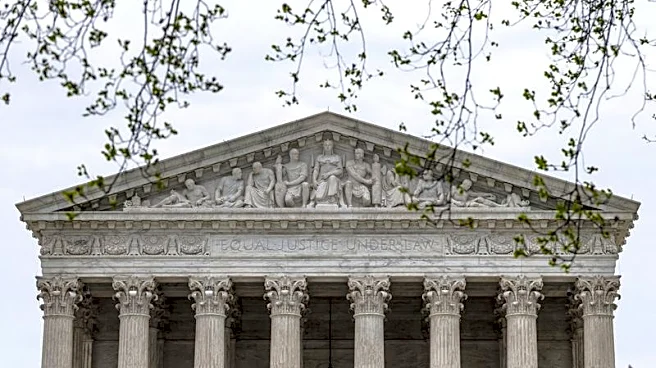
The Supreme Court is set to debate the constitutionality of geofence warrants, which allow police to request location data from tech companies to identify individuals near a crime scene. This case arose from a 2019 bank robbery in Virginia, where police used
such a warrant to obtain data from Google, leading to the arrest of Okello Chatrie. The case challenges the Fourth Amendment's protection against unreasonable searches, with the Justice Department arguing that individuals voluntarily share their location data, thus waiving privacy expectations. Chatrie's defense contends that a warrant is necessary for such data collection.
Why It's Important?
The decision in this case could have far-reaching implications for privacy rights and law enforcement practices in the digital age. A ruling that supports geofence warrants without traditional warrants could expand government surveillance capabilities, potentially infringing on privacy and free speech rights. This case will set a precedent for how digital data is treated under the Fourth Amendment, affecting millions of Americans who use devices that track location data. The outcome will influence future legal interpretations of privacy in the context of modern technology.
What's Next?
The Supreme Court's ruling will likely impact future cases involving digital privacy and law enforcement's access to personal data. A decision in favor of geofence warrants could lead to increased use of such warrants in various investigations, while a ruling against them might prompt legislative action to clarify privacy protections. Stakeholders, including tech companies and civil liberties groups, are closely monitoring the case, as it could reshape the legal landscape regarding digital privacy.