







What's Happening?
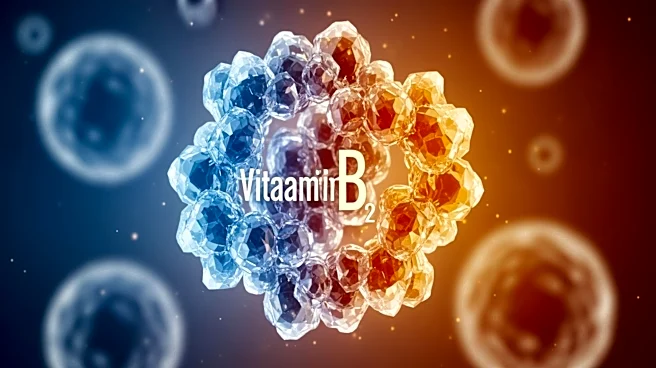
A study published in Nature Cell Biology has revealed that vitamin B2, or riboflavin, plays a dual role in cancer biology. While it is essential for various bodily functions, it also helps cancer cells defend against ferroptosis, a type of cell death.
Researchers from the University of Würzburg found that cancer cells utilize vitamin B2 to bolster their defenses against ferroptosis by supporting the activity of ferroptosis suppressor protein 1 (FSP1). However, the study also suggests that a vitamin B2 mimic, roseoflavin, could disrupt this defense mechanism, making cancer cells more susceptible to ferroptosis.
Why It's Important?
This research highlights a potential new avenue for cancer treatment by targeting the metabolic pathways that cancer cells exploit for survival. By understanding how vitamin B2 supports cancer cell defenses, scientists can develop strategies to selectively disrupt these pathways, potentially leading to more effective cancer therapies. The study also underscores the complexity of nutrient roles in cancer biology, where essential vitamins can have both protective and detrimental effects depending on the context.
What's Next?
Future research will focus on developing compounds like roseoflavin that can selectively target cancer cells' reliance on vitamin B2 without affecting healthy cells. Clinical trials may be designed to test these compounds' efficacy and safety in cancer patients. Additionally, researchers will explore the broader implications of ferroptosis in other diseases, such as neurodegenerative disorders, to develop comprehensive treatment strategies.