



What's Happening?
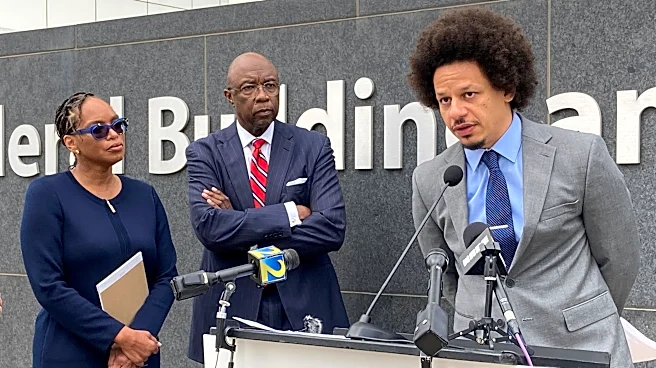
Following a federal lawsuit filed by entertainers Eric André and Clayton English, the Clayton County Police Department, which operates at Hartsfield-Jackson Atlanta International Airport, has agreed to significant changes. The department will end its
controversial 'interdiction' program, which was accused of targeting hundreds of travelers, particularly racial minorities, for encounters without reasonable suspicion. Additionally, officers assigned to the airport will now be required to wear body cameras while on duty and receive training on the constitutional limits governing police encounters at airports. The lawsuit, filed in 2022, alleged coercion and discrimination, citing instances where André and English were stopped on jet bridges and questioned about illegal drugs. The settlement marks a victory for the plaintiffs, who asserted that the program's practices were unconstitutional and degrading.
Why It's Important?
This settlement represents a significant development in police accountability and civil rights at U.S. airports. The termination of the interdiction program addresses long-standing concerns about racial profiling and unconstitutional stops, particularly impacting minority travelers. The mandatory use of body cameras for airport police is a crucial step towards increasing transparency and accountability, providing an objective record of interactions between officers and the public. This can help deter misconduct, protect both citizens and officers, and provide evidence in cases of alleged abuse. The required training on constitutional limits for airport encounters will help ensure that police operations comply with legal standards, safeguarding travelers' rights. This case sets a precedent for other airports and law enforcement agencies, emphasizing the importance of balancing security measures with the protection of civil liberties, and demonstrating the power of legal challenges in driving systemic change within policing practices.
What's Next?
The Clayton County Police Department will proceed with implementing the terms of the settlement, which include immediately ending the airport interdiction program and initiating the process of equipping officers with body cameras. The department will also develop and conduct new training programs for airport-assigned officers, focusing on constitutional limits for police encounters. This will likely involve reviewing existing policies and procedures to ensure compliance with the settlement. Civil rights organizations and legal counsel for the plaintiffs will likely monitor the implementation of these changes to ensure adherence. This case may also encourage other U.S. airports and law enforcement agencies to review their own interdiction programs and consider adopting similar transparency and accountability measures, such as body camera mandates, to avoid similar legal challenges and address public concerns about profiling and civil liberties.
Beyond the Headlines
The Atlanta airport settlement delves into the deeper implications of surveillance and policing in critical transportation hubs. The 'interdiction' program, as described, highlights a tension between national security objectives and individual rights, particularly the right to be free from unreasonable searches and seizures. The alleged targeting of racial minorities underscores systemic issues of bias within law enforcement, even in seemingly neutral environments like airports. The resolution of this lawsuit, compelling the use of body cameras and the cessation of a controversial program, signifies a broader societal shift towards demanding greater transparency and accountability from police forces. It also emphasizes the role of public figures and legal advocacy in challenging and reforming practices that disproportionately affect certain communities. This case contributes to the ongoing national dialogue about police reform, racial justice, and the appropriate scope of law enforcement powers in a democratic society, potentially influencing policy changes beyond airport security to other areas of public policing.