





What's Happening?
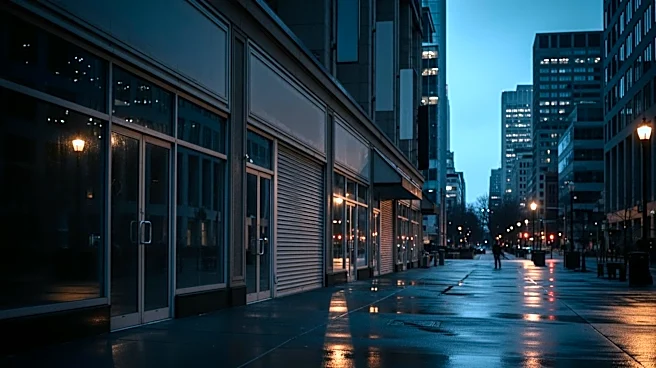
Downtown Los Angeles is experiencing a significant commercial vacancy crisis, with retail property vacancies potentially as high as 40%. This situation is exacerbated by the slow recovery from the pandemic shutdown, leading retailers to opt out of downtown
areas. In contrast, San Francisco has seen a more robust recovery, partly due to the Vacant to Vibrant program, which has successfully turned abandoned spaces into thriving pop-up shops. This initiative has helped brighten struggling retail areas by providing grants, support, and free rent to local entrepreneurs. The program aims to transition pop-ups into long-term leases, creating permanent fixtures in the downtown landscape. Experts warn that dark storefronts can lead to a downward spiral, making it difficult for companies to lease office space in vacant areas.
Why It's Important?
The commercial vacancy crisis in downtown Los Angeles highlights the challenges faced by urban centers in recovering from the pandemic's impact. High vacancy rates can deter businesses from investing in these areas, leading to economic stagnation and reduced foot traffic. The success of San Francisco's Vacant to Vibrant program offers a potential solution for Los Angeles, suggesting that similar initiatives could help revitalize its downtown area. By supporting small businesses and improving public safety, Los Angeles could halt the downward spiral and create a more vibrant urban environment. This situation underscores the importance of innovative urban planning and economic strategies in addressing post-pandemic recovery challenges.
What's Next?
Los Angeles is considering implementing a program similar to San Francisco's Vacant to Vibrant to help fill vacant storefronts and boost foot traffic. The Central City Association is advocating for subsidizing retailers' rents to attract businesses to key corridors. Collaboration with city officials is underway to explore this initiative. Additionally, improving public safety and street conditions is crucial to making downtown Los Angeles more appealing to consumers and businesses. The success of such programs could lead to a ripple effect, encouraging other cities facing similar challenges to adopt innovative solutions for urban revitalization.