



What's Happening?
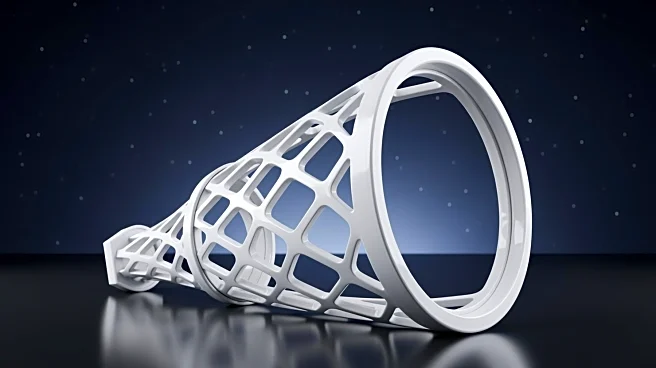
An amateur astronomer has successfully constructed an 8-inch f/5 Newtonian Dobsonian telescope using consumer-grade 3D printing technology. The telescope, named 'Leavitt' after astronomer Henrietta Swan Leavitt, was designed by a user known as Novel Tinker
on the platform Printables. The project utilized a combination of 3D-printed components and traditional materials such as mirrors and a wooden base. The telescope's structure was enhanced with carbon fiber High-Temperature Polylactic Acid (HTPLA) composite, chosen for its rigidity and thermal stability. The telescope was tested at the Rocky Mountain Star Stare event in Colorado, where it demonstrated sharp stellar images and stable collimation, earning an award in an amateur telescope-making competition.
Why It's Important?
This development highlights the growing accessibility and potential of 3D printing technology in the field of amateur astronomy. By enabling enthusiasts to construct complex instruments like telescopes, 3D printing democratizes access to advanced astronomical tools, fostering innovation and education. The project underscores the educational value and intellectual challenge of building custom telescopes, which can inspire science outreach and engagement. Additionally, the modularity of 3D-printed designs allows for continuous improvements and adaptations, potentially leading to more personalized and efficient astronomical equipment.
What's Next?
The success of the Leavitt telescope may encourage more amateur astronomers to explore 3D printing for their projects, potentially leading to a community-driven evolution in telescope design. As 3D printing technology becomes more affordable and accessible, it is likely that more complex and innovative designs will emerge, further enhancing the capabilities of amateur astronomers. This trend could also stimulate interest in STEM fields, as individuals engage with the technical and creative aspects of designing and building their own scientific instruments.
Beyond the Headlines
The use of 3D printing in telescope construction raises interesting questions about the future of manufacturing and customization in scientific equipment. As the technology advances, it could lead to a shift in how scientific tools are produced and distributed, with implications for both professional and amateur astronomers. The ability to easily modify and improve designs could lead to rapid advancements in telescope technology, potentially influencing the broader field of astronomy.