








What's Happening?
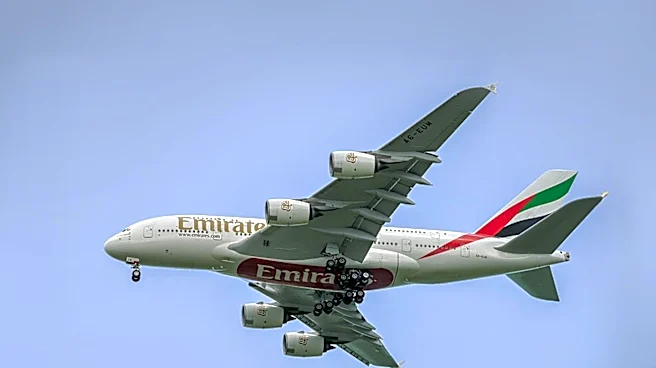
Emirates, the UAE-based airline, is set to expand its services to India by introducing the Airbus A380 on its Dubai-Delhi route and the Airbus A350 on some of its Kolkata flights starting October 25. This move will make Delhi the third Indian city to be served
by Emirates' A380, joining Mumbai and Bengaluru. The airline will operate one of its four daily flights to Delhi with the A380, alongside its existing Boeing 777 services. Additionally, Emirates will begin a daily A350 service between Dubai and Kolkata, complementing its five-times-weekly 777 service on the route. The introduction of these widebody aircraft, which feature a four-class configuration including a premium economy cabin, is part of Emirates' strategy to enhance its premium economy product across India, reaching six gateways and nearly half of its scheduled weekly flights.
Why It's Important?
The expansion of Emirates' services with the A380 and A350 aircraft to Indian cities is significant for several reasons. It underscores the growing demand for air travel between the UAE and India, one of the world's busiest international air corridors. By offering more premium economy options, Emirates is catering to a diverse range of passengers, including business travelers and tourists seeking enhanced comfort. This move also reflects the strengthening economic and cultural ties between the two regions, potentially boosting tourism and business exchanges. For the Indian aviation market, the introduction of larger aircraft like the A380 and A350 could lead to increased competition among airlines, potentially driving down prices and improving service quality for consumers.
What's Next?
As Emirates rolls out these new services, the airline may see increased passenger volumes on its India routes, prompting further expansion or adjustments in its flight schedules. Other airlines operating in the region might respond by enhancing their own service offerings or adjusting pricing strategies to maintain competitiveness. Additionally, the increased capacity and premium offerings could attract more business travelers and tourists, potentially leading to a rise in bilateral trade and tourism between India and the UAE. The success of these new services could also influence Emirates' future decisions regarding fleet deployment and route planning in other high-demand markets.