



What's Happening?
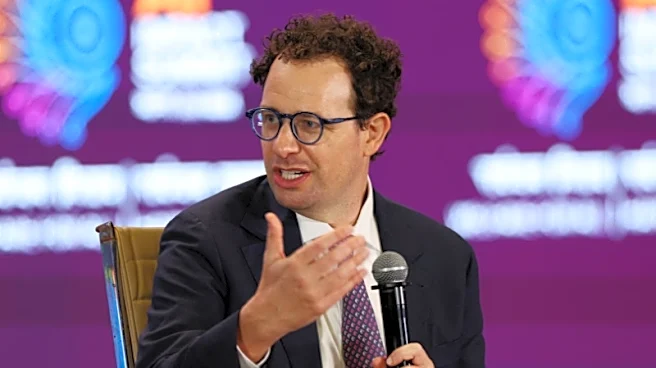
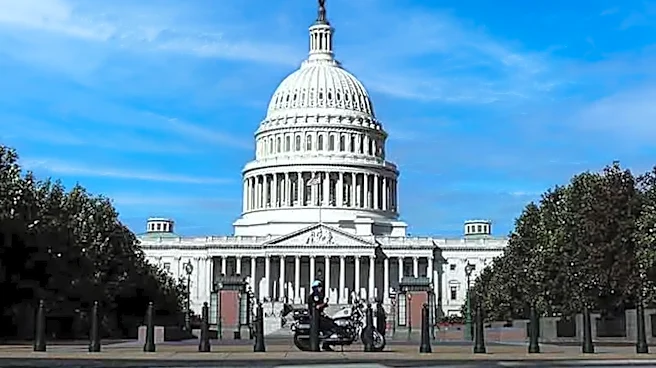
House Speaker Mike Johnson (R-La.) has stated that Congress will not lead the charge on regulating artificial intelligence (AI) safety, emphasizing that any legislative action must be carefully considered. He suggested organizing a summit-style meeting
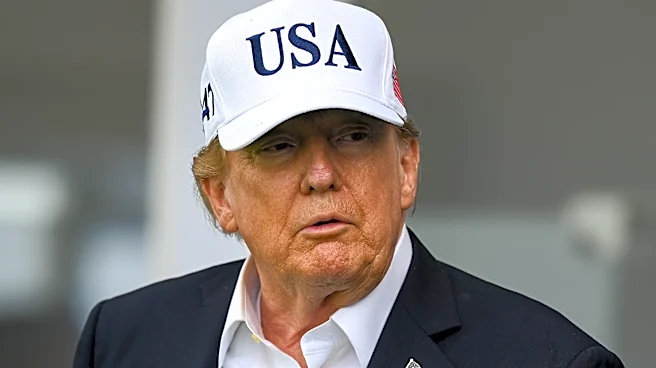
involving lawmakers and tech leaders to discuss AI safety protocols. Johnson's remarks came as President Trump also dismissed urgent warnings about AI, with both leaders prioritizing U.S. innovation and competitiveness against China in the AI race. Johnson argued that if the U.S. were to slow down AI development, China would gain an advantage, posing a national security challenge. He stressed the need to balance national security with ensuring AI models are safe, without stifling American innovation. This stance follows calls from some industry leaders, including Anthropic CEO Dario Amodei and OpenAI CEO Sam Altman, for a slowdown in AI development due to potential existential risks.
Why It's Important?
This position from Speaker Johnson and President Trump signals a cautious approach to AI regulation at the federal level, prioritizing economic and national security interests, particularly in the context of competition with China. The decision to defer immediate congressional regulation could accelerate AI development within the U.S., potentially solidifying its lead in the global AI landscape. However, it also raises concerns among those who advocate for stricter oversight due to the technology's rapid advancement and potential societal risks. The emphasis on a summit-style meeting rather than immediate legislation suggests a preference for industry-led solutions and a collaborative approach to understanding and mitigating AI risks. This could influence the trajectory of AI policy, favoring innovation and economic growth over preemptive regulatory measures, which might have significant implications for tech companies and the broader economy.
What's Next?
The proposed summit-style meeting between lawmakers and tech leaders is the immediate next step, aiming to foster a collaborative discussion on AI safety without rushing into legislation. This gathering will likely shape future policy discussions and potentially lead to industry-driven guidelines or voluntary frameworks for AI development. The focus will remain on balancing innovation with safety, with a keen eye on the U.S.'s competitive position against China. While immediate congressional regulation is unlikely, the outcomes of such a meeting could inform future legislative considerations, albeit with a cautious and deliberate approach. The tech industry will likely continue its rapid development, potentially with increased internal scrutiny and self-regulation in anticipation of future governmental interest.
Beyond the Headlines
The debate over AI regulation highlights a fundamental tension between fostering technological innovation and addressing potential societal risks. By prioritizing the race against China and American innovation, the U.S. government is implicitly accepting a higher degree of risk in the short term, betting on the long-term benefits of technological leadership. This approach could set a precedent for how emerging technologies are governed, emphasizing economic competitiveness over precautionary principles. The call for a summit also underscores a belief in the tech industry's capacity for self-governance and responsible development, rather than immediate governmental intervention. This could lead to a unique regulatory landscape where industry standards and collaborative efforts play a more significant role than traditional legislative frameworks, potentially influencing global norms for AI governance.