


What's Happening?
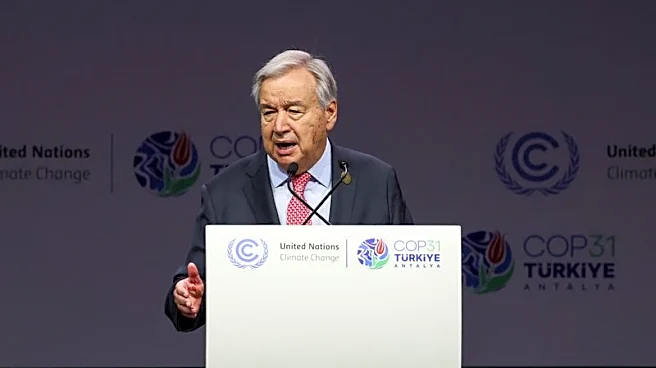
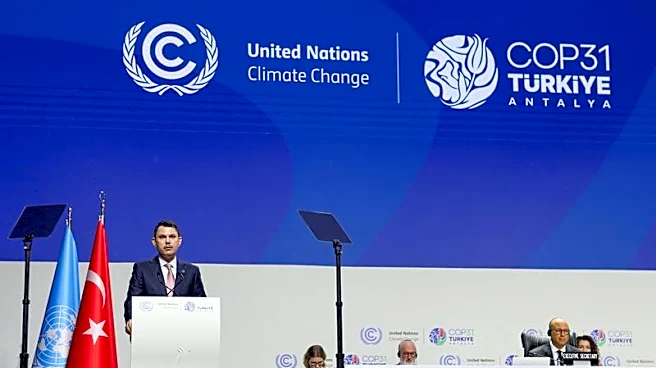
Turkish first lady Emine Erdogan, speaking at a high-level roundtable during the 31st United Nations Climate Change Conference (COP31) in Antalya, called for a fundamental shift in global consumption and waste management practices. She urged governments
to embrace circular economy principles and traditional environmental knowledge to curb rising waste generation and methane emissions. Erdogan, who chairs the United Nations Zero Waste Advisory Board of Eminent Persons, stated that the world must reduce the projected increase in global annual municipal solid waste by at least 50% by 2035. She also advocated for increasing the circular material use rate to at least 15% by treating discarded materials as potential sources of new raw materials. Erdogan emphasized that the growing global waste burden is not just an environmental problem but also a crisis of mindset, culture, and civilization, linking it to the consequences borne by vulnerable populations and the loss of species.
Why It's Important?
Emine Erdogan's call for a 50% reduction in projected waste growth by 2035 at COP31 highlights the urgent need for global action on waste management and its direct link to climate change. Her emphasis on methane emissions, which account for a significant portion of global warming, underscores the critical environmental impact of current waste practices. By advocating for a circular economy and integrating traditional knowledge, Erdogan is promoting a holistic approach that goes beyond mere recycling to address the root causes of waste generation. For the U.S., this global initiative could influence domestic policy and corporate strategies, encouraging greater investment in sustainable production, consumption, and waste infrastructure. Businesses that adopt circular economy principles could gain a competitive edge, while those that continue with linear models may face increasing regulatory pressures and consumer demand for more sustainable products. The focus on vulnerable populations also brings a social justice dimension to waste management, urging a more equitable distribution of environmental benefits and burdens.
What's Next?
Following Emine Erdogan's address at COP31, the focus will be on translating these ambitious targets into practical measures and integrating zero-waste principles into everyday life globally. This will require significant international cooperation to improve developing countries' access to financing, technology, knowledge, and capacity-building opportunities. For the U.S., this could mean exploring new partnerships and investments in waste management solutions abroad, as well as strengthening domestic policies to align with these global goals. Economic models that encourage the production of repairable goods and product designs that extend the lifespan of materials are likely to gain traction. The call for local governments, producers, young people, and citizens to become active partners suggests a multi-stakeholder approach to achieving these targets. The ongoing discussions at COP31 will likely shape future international agreements and national commitments regarding waste reduction and circularity.
Beyond the Headlines
Emine Erdogan's speech delves into the deeper cultural and philosophical dimensions of waste, arguing that the crisis reflects a flawed mindset and consumption culture. By recalling how disposable products were once symbols of modernity, she highlights how societal values have shaped our relationship with resources. Her call to learn from nature, which creates no waste, and to revive traditional practices of reuse and repair, suggests a profound re-evaluation of our relationship with the environment. This perspective challenges the notion that environmental protection is solely a technical problem, emphasizing the need for a value-based system that people can understand and incorporate into their daily lives. For the U.S., this implies a need for cultural shifts alongside technological advancements, encouraging a greater appreciation for resources and a move away from a throwaway culture. It also underscores the importance of education and community engagement in fostering sustainable habits and a sense of shared responsibility for environmental stewardship.