

What's Happening?
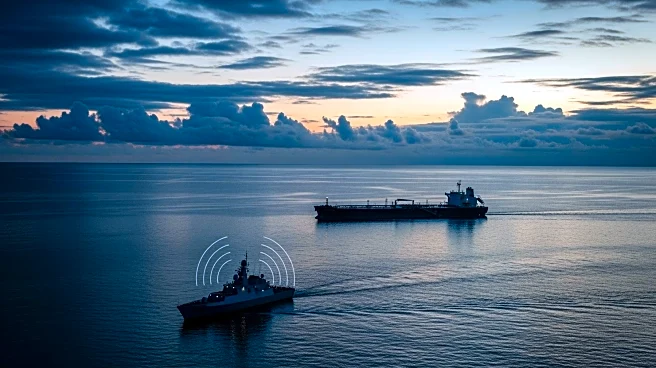
The United States is preparing to intercept an oil tanker, originally named Bella 1, which Russia has claimed jurisdiction over. The tanker, previously sanctioned by the U.S. for transporting illicit oil, was initially headed for Venezuela but changed
course to avoid U.S. seizure. Recently, the crew painted a Russian flag on the hull, and the vessel was registered under a new name, Marinera, in Russia. This move has complicated the legalities of seizing the tanker. The U.S. has been monitoring the tanker using P-8 surveillance aircraft and has repositioned military assets to the UK, indicating a potential confrontation with Russia over the vessel's fate.
Why It's Important?
This development highlights escalating tensions between the U.S. and Russia, particularly concerning sanctions and maritime jurisdiction. The U.S. aims to enforce a blockade on sanctioned oil tankers to pressure the Venezuelan regime, which could lead to diplomatic strains with Russia. The situation underscores the complexities of international maritime law and the geopolitical implications of enforcing sanctions. The interception of the tanker could set a precedent for future actions against vessels operating under disputed flags, affecting global oil markets and international relations.
What's Next?
The U.S. may deploy Special Operations Forces to intercept the tanker, a move complicated by adverse weather and Russia's claim of ownership. The situation could lead to diplomatic negotiations or further military posturing. The outcome may influence U.S.-Russia relations and impact future enforcement of international sanctions. Observers will watch for Russia's response and any potential escalation in military or diplomatic actions.