








What's Happening?
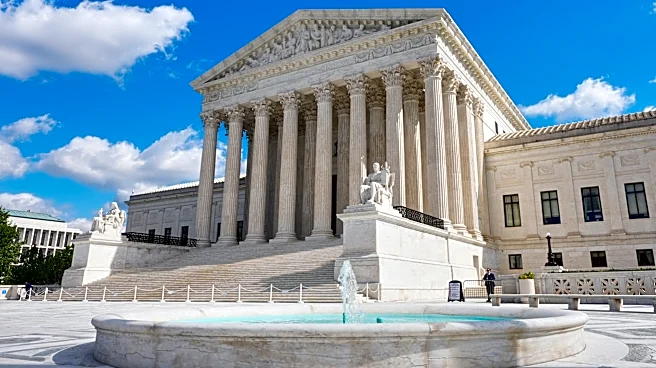
The Judiciary Act of 1789, signed into law by George Washington on September 24, 1789, laid the essential groundwork for the U.S. federal judiciary as outlined in Article III of the Constitution. Drafted primarily by Oliver Ellsworth, who later became
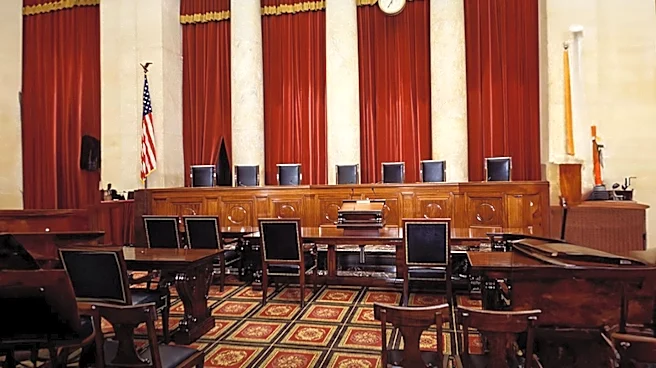
the third chief justice, the Act established a Supreme Court composed of a chief justice and five associate justices. It also created 13 judicial districts across the 11 ratifying states, setting up district courts for minor cases and circuit courts staffed by a district judge and two Supreme Court justices who traveled to hear cases. Beyond the court structure, the Act created the positions of attorney general, U.S. attorneys, and U.S. marshals for each district. A significant innovation was the introduction of removal jurisdiction, allowing out-of-state defendants to move cases into federal court. The Act also included the Alien Tort Statute, addressing claims by foreigners under international law. Notably, Section 13 of the Act, which granted the Supreme Court original jurisdiction to issue writs of mandamus, later became the basis for the landmark 1803 case Marbury v. Madison, where Chief Justice John Marshall invalidated part of the Act and established the principle of judicial review.
Why It's Important?
The Judiciary Act of 1789 was a pivotal piece of legislation that translated the constitutional framework for the judiciary into a functional system, profoundly shaping the American legal landscape. By establishing the Supreme Court's initial composition and creating a tiered system of federal district and circuit courts, it ensured the presence of a federal judicial presence across the nascent United States. The creation of the Attorney General and U.S. Attorneys was crucial for the enforcement of federal laws and the representation of the government's legal interests. The Act's provisions, particularly removal jurisdiction, addressed Anti-Federalist concerns about distant federal judges by providing mechanisms for cases to be heard at different levels. Its most enduring legacy, however, lies in its indirect role in establishing judicial review through Marbury v. Madison. This principle, where the Supreme Court can declare acts of Congress unconstitutional, cemented the judiciary's role as a co-equal branch of government and a guardian of the Constitution, fundamentally impacting the balance of power and the interpretation of law in the U.S. for centuries to come.
What's Next?
While the Judiciary Act of 1789 established the initial structure, the federal judiciary has continuously evolved through subsequent legislation and judicial interpretations. The number of Supreme Court justices, the structure of lower federal courts, and the scope of federal jurisdiction have all been modified over time by Congress. The principles of judicial independence and the rule of law, deeply embedded in the Act's legacy, remain central to ongoing debates about the judiciary's role and its interactions with the other branches of government. Discussions about court reform, judicial appointments, and the balance between federal and state judicial power continue to draw upon the foundational concepts laid out in this Act. The Act's historical significance serves as a constant reference point for understanding the origins and development of the U.S. legal system, influencing how future challenges to judicial authority and constitutional interpretation are approached.
Beyond the Headlines
The Judiciary Act of 1789 reflects the delicate balance the Founding Fathers sought between a strong federal government and states' rights. The fear of distant federal judges, as noted by Anti-Federalists, led to provisions like circuit-riding justices, which ensured Supreme Court justices had direct exposure to local legal issues and communities. This early practice fostered a connection between the highest court and the populace, a dynamic that has changed significantly with the modern, stationary Supreme Court. The Act's creation of the Alien Tort Statute also highlights early American engagement with international law and the rights of non-citizens, a topic that continues to be relevant in contemporary legal discourse. The Act's enduring influence on judicial review, a power not explicitly granted by the Constitution but established through interpretation, demonstrates the judiciary's capacity to shape its own role and the constitutional order. This historical context underscores the dynamic nature of constitutional interpretation and the judiciary's critical, evolving role in American governance.