






What's Happening?
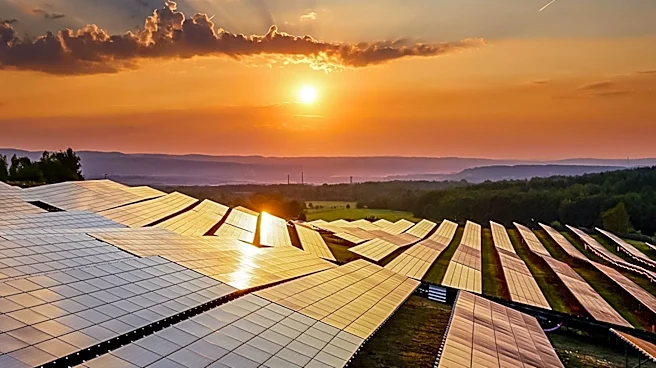
Hungary has emerged as a leader in solar energy production in Europe, generating 25% of its electricity from solar power. This development is surprising given the country's previous stance against renewable energy, particularly wind turbines. The shift
towards solar energy has been driven by political motivations for self-sufficiency and the availability of cheap subsidies, rather than environmental concerns. A new 450-megawatt solar park near Budapest is set to become operational by September 2026, providing power to approximately 106,000 households.
Why It's Important?
Hungary's unexpected rise in solar energy production highlights the potential for political and economic factors to drive renewable energy adoption. This shift could influence other countries to reconsider their energy policies, especially those with similar political climates. The move towards solar energy also has implications for Hungary's energy independence and its relationship with the European Union, as it aligns with EU climate goals despite previous criticisms. Additionally, the success of Hungary's solar initiatives may encourage further investment in renewable energy infrastructure across Europe.
What's Next?
As Hungary continues to expand its solar energy capacity, it may face challenges related to grid integration and energy storage. The government will need to address these issues to ensure the stability and reliability of its energy supply. Furthermore, Hungary's experience could serve as a model for other countries seeking to balance energy independence with environmental sustainability. The international community will likely monitor Hungary's progress and its impact on regional energy markets.
Beyond the Headlines
Hungary's solar energy boom raises questions about the role of government policy in shaping energy transitions. It also highlights the potential for renewable energy to contribute to national security by reducing reliance on foreign energy sources. The situation underscores the importance of aligning political and economic incentives with environmental goals to achieve sustainable energy solutions.