





What's Happening?
Senator John Boozman, a Republican from Arkansas and Chairman of the Senate Agriculture Committee, has been actively involved in discussions surrounding California's Proposition 12 and its potential inclusion in the federal farm bill. Proposition 12 mandates
specific livestock production standards, particularly for breeding pigs, requiring at least 24 square feet of usable floor space and generally preventing the use of traditional gestation crates for products sold in California. While Senator Boozman supports congressional action to address Proposition 12, he acknowledged in April that the Senate farm bill was unlikely to adopt the House's approach due to a lack of Democratic support. The House had passed a farm bill provision that would prevent states from imposing livestock production standards on products originating outside their borders. A proposed compromise, which would grandfather existing state laws while preventing new similar requirements, also failed to gain Democratic backing. Senate Democratic Leader Chuck Schumer publicly opposed efforts to include the 'Save Our Bacon Act' in the farm bill, arguing it would undermine state food safety and animal welfare laws. Consequently, the Senate farm bill released by Boozman in June did not contain any Proposition 12 provision. The broader farm bill itself faced a significant hurdle in August when the Senate Agriculture Committee failed to advance it due to disputes over Supplemental Nutrition Assistance Program costs.
Why It's Important?
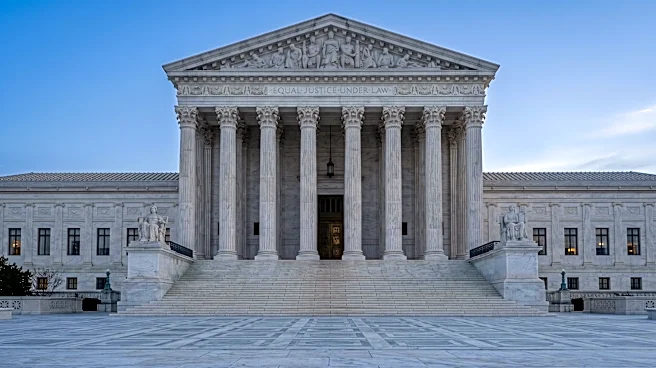
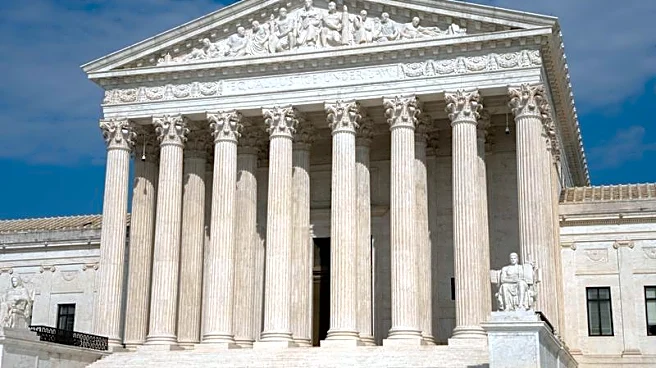
The ongoing legislative struggle over Proposition 12 has significant implications for the U.S. pork industry and the balance of state versus federal regulatory authority. The National Pork Producers Council (NPPC) views a federal solution as crucial to prevent a patchwork of differing state-level production mandates, which they argue could create immense compliance burdens and costs for producers. The U.S. Supreme Court's rejection of a challenge to Proposition 12 in 2023 left the law in place, intensifying the industry's focus on congressional intervention. Opponents of federal preemption, such as Farm Action Fund President Joe Maxwell, argue that farmers have historically adapted to changing consumer preferences and that Proposition 12 creates new market opportunities for those willing to comply. Maxwell contends that federal intervention could disrupt these emerging premium markets, potentially harming smaller producers who have already invested in compliance. The debate highlights a fundamental disagreement within the agricultural sector regarding the role of government in setting production standards and the economic impact on different scales of farming operations.
What's Next?
The future of a federal solution to Proposition 12 remains uncertain, with the farm bill's progress being a critical factor. The Senate Agriculture Committee recessed its August markup, leaving open the possibility of returning to the legislation. If the committee reconvenes, an amendment addressing Proposition 12 could still be considered. If not, the NPPC's focus would shift to negotiations between the House and Senate, leveraging the language already secured in the House bill. However, with the approaching November mid-term elections and limited legislative time, the window for action is narrowing. If Congress fails to pass a farm bill this year, the debate over Proposition 12 could extend into the next congressional session, potentially leading to more states adopting similar animal housing measures. This ongoing uncertainty forces pork producers to make strategic decisions, either investing in compliance with existing state laws like Proposition 12 or hoping for a future federal intervention that could alter the regulatory landscape. The outcome will determine whether producers face a fragmented market with varying state requirements or a more unified national standard.
Beyond the Headlines
Beyond the immediate legislative and economic concerns, the Proposition 12 debate touches upon deeper ethical and legal questions regarding animal welfare, consumer choice, and states' rights. The conflict underscores the tension between a state's ability to regulate commerce within its borders based on moral or social considerations and the potential for such regulations to impact interstate commerce and agricultural practices nationwide. The argument that consumers are increasingly demanding ethically produced food, as highlighted by Joe Maxwell, suggests a long-term shift in market dynamics that producers must navigate. Conversely, the NPPC's concern about a 'hodgepodge' of state laws raises questions about the efficiency and fairness of a fragmented regulatory environment for a national industry. This situation could set precedents for how other states might impose their own production standards on various agricultural products, potentially leading to a complex and costly regulatory landscape across different sectors. The outcome of this debate could influence future discussions on federalism, agricultural policy, and the evolving relationship between food production and societal values.