





What's Happening?
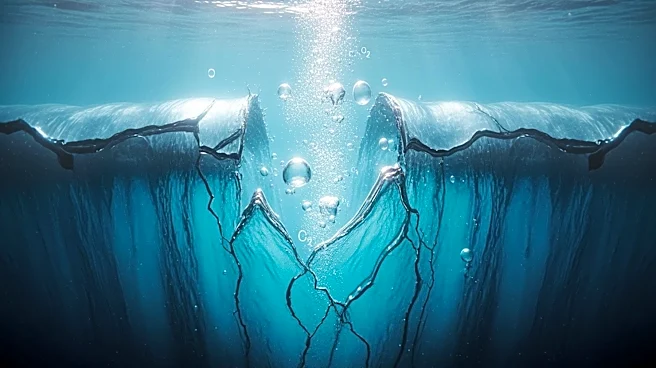
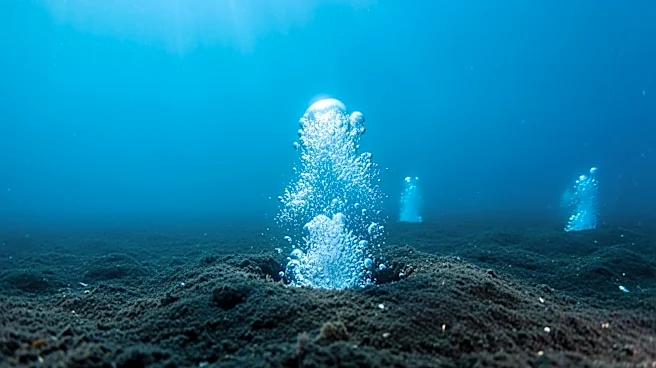
Researchers at the University of Rochester have discovered a significant source of methane production in the open ocean, which could exacerbate global warming. The study, published in the Proceedings of the National Academy of Sciences, highlights a microbial
process that produces methane in oxygen-rich surface waters, a phenomenon previously unexplained. The process is driven by certain bacteria that generate methane when breaking down organic material in environments with low phosphate levels. This discovery suggests that methane production in the ocean is more common than previously thought, especially in areas with scarce phosphate. As climate change warms the ocean, the density difference between surface and deep waters increases, reducing the vertical mixing that brings nutrients like phosphate to the surface. This could lead to more methane emissions, creating a feedback loop that intensifies climate change.
Why It's Important?
The findings have significant implications for climate change models, which currently do not account for this feedback loop. Methane is a potent greenhouse gas, and increased emissions from the ocean could accelerate global warming. Understanding this process is crucial for improving climate predictions and developing strategies to mitigate its impact. The study underscores the importance of considering natural greenhouse gas sources in climate models, as they can have far-reaching effects on global warming. This research could lead to more accurate climate forecasts and inform policy decisions aimed at reducing greenhouse gas emissions.
What's Next?
Future research will likely focus on incorporating this feedback loop into climate models to better predict the pace and severity of climate change. Scientists may also investigate other potential natural sources of greenhouse gases and their interactions with the changing environment. Policymakers and environmental organizations might use this information to advocate for more comprehensive climate action plans that address both human-made and natural emissions. Additionally, further studies could explore ways to mitigate methane emissions from the ocean, potentially through nutrient management strategies.