





What's Happening?
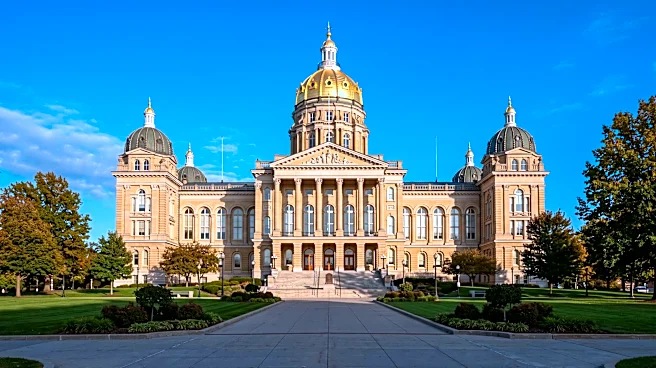
Iowa Republicans have passed legislation, signed into law by Governor Kim Reynolds on May 1, 2024, prohibiting local governments from establishing or maintaining guaranteed income programs. This ban has drawn strong criticism from local officials, including
Johnson County Supervisor Mandi Remington, who had advocated for a guaranteed income initiative in her community. Remington argues that the state is engaging in 'ideological wars' and hindering local control, preventing research and evaluation of evidence-based poverty alleviation policies. The ban comes as many guaranteed income pilot programs across the U.S., often initiated with federal pandemic relief funds from the American Rescue Plan Act (ARPA), face an impending funding cliff, with ARPA funds needing to be spent by December 31, 2026. Proponents of the ban contend that such programs undermine the American work ethic, subsidize low wages, and foster government dependency.
Why It's Important?
This legislative action in Iowa highlights a growing national debate over the efficacy and role of guaranteed income programs. The ban restricts local governments' ability to experiment with direct cash transfer policies aimed at poverty reduction and economic stability, particularly as federal pandemic relief funds expire. This could impact vulnerable populations who might benefit from such programs, especially during periods of high cost-of-living. The move also underscores a broader tension between state and local control, with state lawmakers overriding local initiatives. For organizations like the Economic Security Project, which has helped establish over 100 guaranteed income pilots nationwide, the Iowa ban represents a significant setback and a challenge to their advocacy for direct cash transfer policies as a tool for economic security. The debate also touches on philosophical differences regarding government assistance and individual responsibility.
What's Next?
With the ban in place, local governments in Iowa will be unable to pursue guaranteed income programs, potentially forcing communities to seek alternative, non-governmental solutions for poverty alleviation. The Economic Security Project and other progressive groups are likely to continue advocating against such state-level restrictions and for the continuation of guaranteed income pilots in other states. As federal ARPA funds dry up by the end of 2026, many existing pilot programs across the U.S. will need to secure new funding sources, either through local taxes, private philanthropy, or new federal initiatives. The political debate surrounding guaranteed income is expected to persist, with more states potentially considering similar bans or, conversely, exploring ways to sustain or expand these programs.
Beyond the Headlines
The Iowa ban on guaranteed income programs reflects a deeper ideological divide within U.S. politics regarding social welfare and economic policy. It raises questions about the balance of power between state and local governance and the extent to which states should dictate local policy choices, particularly on issues with significant social and economic implications. The argument that guaranteed income undermines the work ethic contrasts with evidence from some pilot programs suggesting improved financial stability and well-being for recipients. This legislative action could also influence the national conversation on how best to address poverty and economic inequality, potentially pushing the focus towards other forms of social support or economic development initiatives that align with conservative principles. The long-term impact on communities that might have benefited from these programs, especially those facing economic precarity, remains a critical, less obvious implication.