





What's Happening?
In September 2026, the Ouray County coroner, Glenn Boyd, released autopsy results confirming that Jennifer Nelson, 54, drowned in an unmarked mine shaft in October 2025. Hypothermia was identified as a contributing factor to her death, with the shaft's
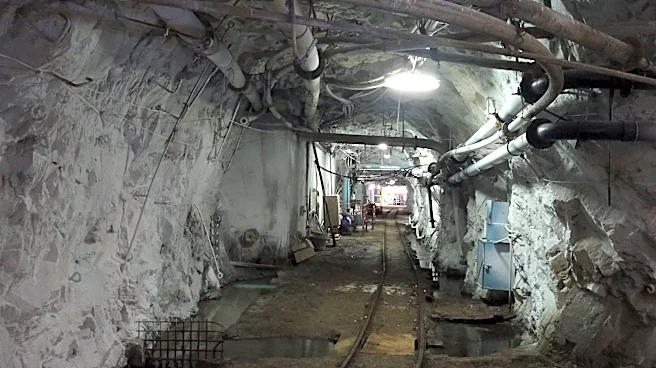
water temperature recorded at 30 degrees. Nelson also sustained minor blunt force injuries. Her cell phone data indicated two unsent text messages to her husband, Jeff Rivera, attempting to call for help. The incident occurred after Nelson, an experienced hiker, went missing during a walk with her dogs. Rescuers located her body in the mine shaft after finding her dogs nearby. The mine was previously unknown to the Colorado Division of Reclamation, Mining, and Safety, highlighting the challenge of identifying and securing thousands of abandoned mines across the state. The shaft has since been covered with a metal grate and permanently closed by the state.
Why It's Important?
This incident underscores the significant public safety hazard posed by the estimated 40,000 to 50,000 abandoned mine sites in Colorado, many of which are unmarked and uncatalogued. The death of Jennifer Nelson, an experienced outdoorswoman, illustrates that even those familiar with backcountry areas are at risk. The lack of comprehensive data on these sites makes proactive mitigation difficult, leaving the public vulnerable to falls, hypothermia, and other dangers. The case highlights the resource constraints faced by state programs, such as Colorado's abandoned mine program, which operates on a limited budget, with only a fraction dedicated to hardrock mine closures. This funding disparity means that efforts to secure these dangerous sites are often reactive rather than preventive, emphasizing the need for increased federal and state support to address this widespread issue.
What's Next?
Following Jennifer Nelson's death, the specific mine shaft where she died has been permanently closed with a metal grate. However, the broader issue of thousands of unaddressed abandoned mines across Colorado and other Western states remains. Advocates like Jeff Graves, director of Colorado's active and inactive mines reclamation program, are pushing Congress for more funding specifically for hardrock mine closures. This legislative push aims to enhance the capacity of state programs to identify, assess, and remediate these hazardous sites. Public awareness campaigns, similar to those in Utah, may also be expanded to educate hikers and outdoor enthusiasts about the dangers of abandoned mines. The ongoing challenge will be to balance public access to natural areas with the imperative to secure these historical but dangerous relics of mining history.
Beyond the Headlines
The tragedy of Jennifer Nelson's death in an abandoned mine shaft reveals a deeper, often overlooked, aspect of America's historical development: the enduring legacy of the mining boom. The vast number of unmapped and unsecured mines across the West reflects a past era of rapid resource extraction with little foresight for long-term environmental and safety consequences. This situation presents not only a physical danger but also an ethical dilemma regarding responsibility for these historical hazards. The emotional toll on families, as seen with Jeff Rivera's struggle for answers, highlights the human cost of this neglect. Furthermore, the incident touches upon the cultural tension between preserving historical sites and ensuring public safety, as some abandoned mines are viewed as part of the region's heritage. Addressing this issue requires a comprehensive approach that includes increased funding, advanced mapping technologies, and a reevaluation of how historical industrial sites are managed in contemporary society.