


What's Happening?
The California Department of Forestry and Fire Protection (Cal Fire) has filed a lawsuit against CalPortland Company and its employee, Christopher Dearman, in Shasta County Superior Court. The lawsuit claims that a poorly maintained locomotive operated
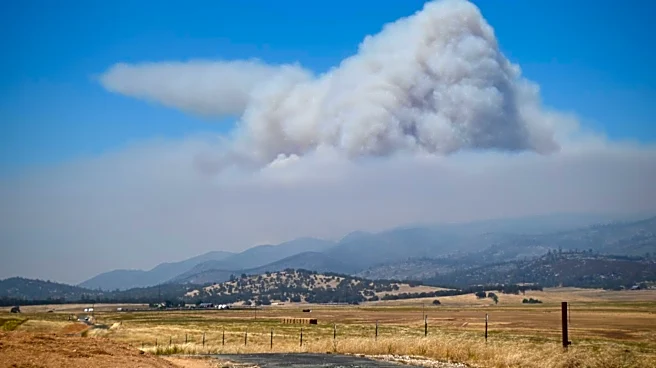
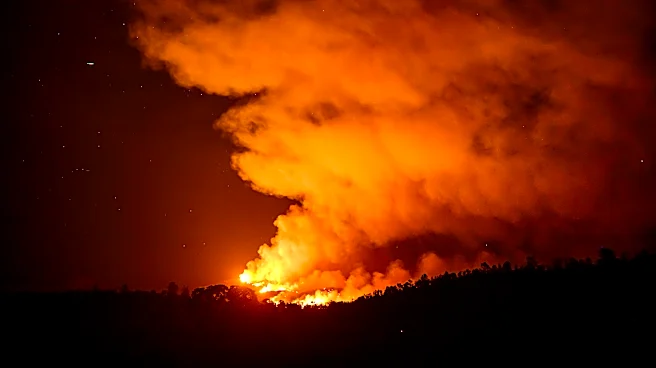
by Dearman started the 2023 Wonder Fire in Shasta County. Cal Fire is seeking at least $2.8 million to cover the costs of fighting and investigating the fire, along with interest, attorney fees, and other court-related expenses. The fire, which began on July 24, 2023, allegedly started when the locomotive's braking system produced hot metal or sparks that ignited dry vegetation along the tracks. The fire burned approximately 162 acres of grass, brush, and timber. Cal Fire's investigation found signs of worn brake parts and a piece of metal near the tracks, suggesting maintenance issues. A mandatory settlement conference is scheduled for April 19, 2027, with a trial set for June 22, 2027.
Why It's Important?
This lawsuit highlights the significant financial and environmental impacts of industrial negligence. If Cal Fire's claims are proven, it could set a precedent for holding companies accountable for maintenance failures that lead to environmental disasters. The case underscores the importance of stringent maintenance protocols and the potential consequences of neglecting them. For CalPortland, the lawsuit represents a substantial financial liability and reputational risk. The outcome could influence regulatory scrutiny and operational practices within the industry, emphasizing the need for compliance with safety and environmental standards. Additionally, the case may prompt other companies to reassess their maintenance and safety procedures to avoid similar legal and financial repercussions.
What's Next?
The legal proceedings will continue with a mandatory settlement conference in April 2027, followed by a trial in June 2027. The outcome of this case could lead to increased regulatory oversight and stricter enforcement of maintenance standards in the industry. Stakeholders, including environmental groups and industry regulators, will likely monitor the case closely. Depending on the court's decision, CalPortland may face financial penalties and be required to implement corrective measures. The case could also influence future legislation aimed at preventing similar incidents, potentially leading to more rigorous safety and maintenance regulations for industrial operations.