









What's Happening?
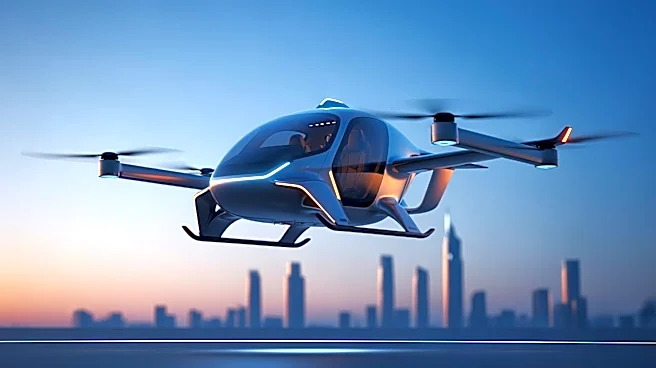
The Federal Aviation Administration (FAA) has issued a final rule updating regulations to allow air carrier operations using powered-lift aircraft, which are capable of vertical takeoffs and landings, to carry passengers and cargo. This rule provides
a regulatory framework for routine operations using certified Advanced Air Mobility (AAM) aircraft. AAM refers to a novel transportation system using electric-powered aircraft for short-distance travel, typically between 10 to 150 miles. The FAA's Aircraft Certification Service plays a primary role in certifying these aircraft, collaborating with international civil aviation authorities and NASA to adopt industry standards. Congress has expressed interest in supporting AAM development to promote U.S. leadership in technology innovation.
Why It's Important?
The integration of AAM aircraft into the national airspace system represents a significant advancement in transportation technology, potentially transforming urban mobility and cargo delivery. By supporting AAM development, the U.S. aims to maintain its leadership in aviation technology and infrastructure. The certification process ensures safety and quality assurance, which are crucial for public acceptance and operational success. The FAA's regulatory framework and Congress's legislative support are pivotal in fostering innovation and addressing challenges related to aircraft design, automation, and environmental impacts.
What's Next?
The FAA's Innovate28 plan suggests that initial AAM operations may be realized by 2028, with operations likely requiring unique considerations for low-altitude airspace management. The FAA is developing interim measures to tailor regulatory approvals for commercial flight operators using AAM vehicles. As the industry matures, dedicated infrastructure such as vertiports may be constructed, pending public acceptance and regulatory approvals. The Department of Transportation has announced projects to explore AAM operational concepts, indicating ongoing federal support for the industry's growth.
Beyond the Headlines
The development of AAM aircraft poses several design and operational challenges, including automation, pilot training, and environmental considerations. The FAA's certification process addresses these challenges, ensuring compliance with safety and performance standards. The integration of AAM into the airspace system may lead to long-term shifts in transportation infrastructure and urban planning, potentially reducing congestion and enhancing connectivity in densely populated areas.