







What's Happening?
A groundbreaking study has mapped the global distribution of arbuscular mycorrhizal fungi networks, revealing their extensive reach and critical role in sustaining plant life and regulating the climate. Conducted by the Society for the Protection of Underground
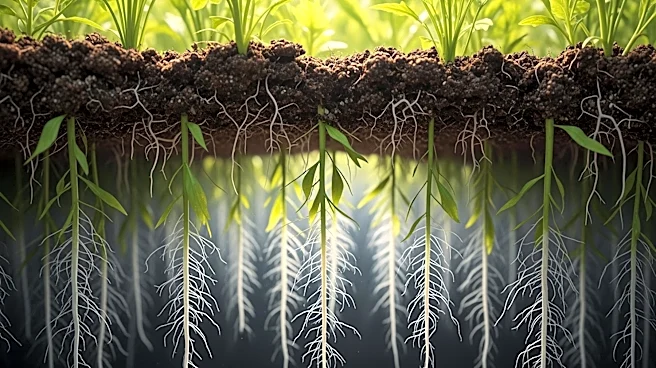
Networks (Spun), the research utilized machine-learning models and data from over 16,000 soil samples worldwide. The study found that these fungal networks, if laid end to end, would stretch 110 quadrillion kilometers, nearly 750 million times the distance from Earth to the sun. These networks, which have existed for approximately 475 million years, form symbiotic relationships with over 70% of plant species, providing essential nutrients and water in exchange for carbon. However, the study also highlights threats to these networks, particularly from agricultural practices like tilling and the use of fertilizers and fungicides, which can disrupt these vital symbiotic relationships.
Why It's Important?
The findings underscore the importance of fungal networks in maintaining ecological balance and addressing climate change. These networks enhance soil carbon storage and nutrient distribution, which are crucial for plant growth and climate regulation. The study warns that the degradation of these networks, particularly in agricultural lands, could lead to increased chemical runoff into waterways and reduced soil fertility. This research provides valuable data that could inform agricultural practices and policy decisions, promoting sustainable farming methods that protect and enhance fungal networks. By understanding and preserving these networks, there is potential to improve food security and mitigate climate change impacts.
What's Next?
The study's findings will be presented to governments at the upcoming desertification conference in Mongolia, aiming to influence policy and conservation efforts. Researchers advocate for collaboration between farmers and scientists to protect and support soil fungi, potentially reducing the need for chemical fertilizers and enhancing natural nutrient uptake by plants. This approach could lead to more sustainable agricultural practices and improved carbon sequestration in soils. The study also calls for increased protection of regions with dense fungal networks, such as grasslands, which are currently under threat from degradation.
Beyond the Headlines
The research highlights a growing movement to restore not only visible ecosystems but also the critical underground fungal communities. This shift in focus could lead to a reevaluation of conservation priorities and agricultural practices, emphasizing the interconnectedness of above-ground and below-ground ecosystems. The study also opens avenues for further research into the role of fungi in addressing global challenges like food security and climate change, potentially leading to innovative solutions that leverage these ancient networks.