







What's Happening?
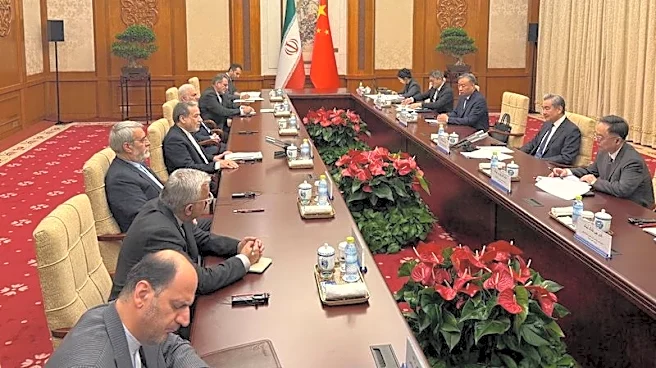
The United States and Iran are reportedly close to reaching a deal to end the ongoing conflict, according to President Trump. The proposed agreement involves a memorandum of understanding that would limit Iran's nuclear program and reopen the Strait of Hormuz,
a critical maritime passage. The negotiations have seen progress, with both sides discussing terms such as the lifting of U.S. sanctions and the export of Iran's enriched uranium. However, there remains cautious optimism as previous talks have failed to yield a final agreement.
Why It's Important?
The potential deal is crucial for regional stability and global economic interests, particularly concerning oil markets. Reopening the Strait of Hormuz would alleviate tensions and ensure the free flow of oil, impacting global oil prices and economic stability. The agreement could also mark a significant diplomatic achievement for the U.S., potentially reshaping its foreign policy in the Middle East. However, the success of the deal hinges on mutual trust and compliance, with significant implications for international relations and nuclear non-proliferation efforts.
What's Next?
Negotiations are expected to continue, with both sides working to finalize the terms of the agreement. The international community, including U.S. allies and adversaries, will closely watch the developments. The outcome could influence future diplomatic engagements and set a precedent for resolving similar conflicts. Additionally, the U.S. administration may face domestic political challenges in securing support for the deal, particularly from those skeptical of Iran's intentions.