






What's Happening?
President Xi Jinping of the People's Republic of China has announced the appointment of Li Chijiang as the new Deputy Permanent Representative to the United Nations Office at Geneva and other International Organizations in Switzerland. Concurrently, Li Chijiang will
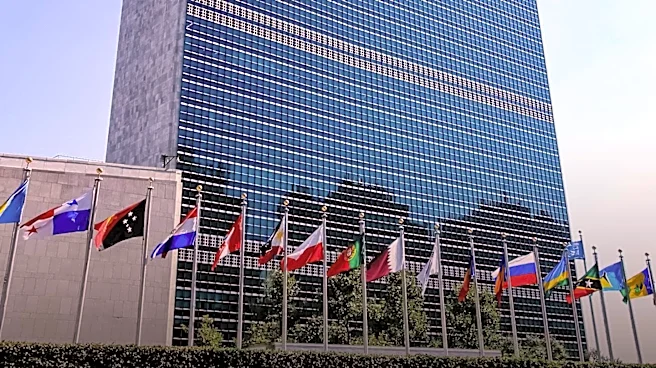
also serve as the Ambassador Extraordinary and Plenipotentiary for Disarmament Affairs, replacing Shen Jian. This appointment is part of a broader series of ambassadorial changes, including new envoys to Sri Lanka, Uganda, and Australia. The move positions a key Chinese diplomat in a significant multilateral hub, indicating China's strategic focus on international organizations based in Geneva. The United Nations Office at Geneva hosts numerous critical international bodies, making this a pivotal diplomatic posting.
Why It's Important?
This appointment is important as it signifies China's continued and potentially expanding influence within global governance structures, particularly those centered in Geneva. By placing a high-level diplomat with a specific focus on disarmament affairs in such a prominent role, China is signaling its intent to be a more active and influential player in international discussions on arms control, non-proliferation, and related security issues. For the U.S. and its allies, this could mean increased engagement, and potentially competition, with China on multilateral platforms. China's growing presence in these international bodies can shape agendas, influence policy outcomes, and potentially challenge existing norms or leadership dynamics, impacting global diplomatic efforts and the balance of power within the UN system.
What's Next?
The new Deputy Permanent Representative, Li Chijiang, is expected to assume duties in Geneva, engaging with various UN agencies and international organizations. This will likely involve active participation in disarmament conferences, human rights council sessions, and other multilateral forums. Observers will be watching for any shifts in China's diplomatic approach or priorities within these bodies, particularly concerning sensitive issues like human rights or global security. The appointment could lead to more assertive Chinese diplomacy in Geneva, potentially influencing the outcomes of international negotiations and resolutions. Other nations will likely assess the implications of this enhanced Chinese representation for their own diplomatic strategies within the UN system.
Beyond the Headlines
Beyond the immediate diplomatic implications, this appointment reflects a broader trend of China's strategic engagement with multilateral institutions. By strengthening its representation in key global centers like Geneva, China aims to project its soft power, advocate for its national interests, and contribute to shaping international norms and rules. This proactive approach is part of China's long-term vision for a more multipolar world order, where its voice carries significant weight. The focus on disarmament affairs, in particular, could indicate China's desire to play a more central role in global security dialogues, potentially offering alternative perspectives to those traditionally championed by Western powers. This could lead to a re-evaluation of existing international frameworks and a more complex geopolitical landscape within the UN.