








What's Happening?
On December 17, 2026, the U.S. Department of Agriculture’s (USDA) Agricultural Marketing Service (AMS) will conduct an in-person event at the Cattle and Carcass Training Center at West Texas A&M University in Canyon, Texas. This public event will concentrate
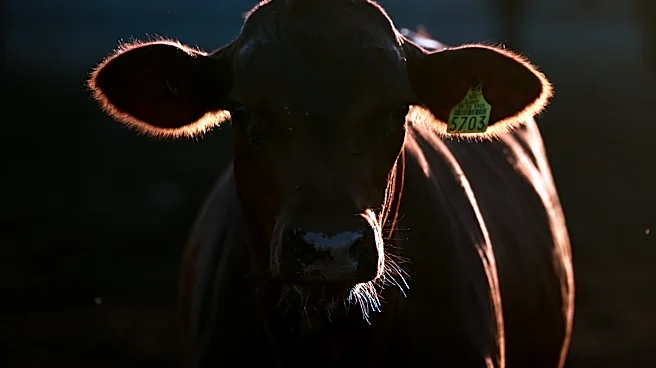
on the grading and marketing of feeder cattle. Attendees will have the opportunity to examine the latest data-analytic dashboards developed by AMS and gain insights from subject matter experts on feeder cattle evaluation and marketing strategies. A key feature of the event will be a live feeder cattle evaluation session. Furthermore, participants will be able to view AMS’s prototype for GrAider – Live, which is a Super Intelligence Model designed to apply USDA Feeder Cattle Grades to live animals using advanced imagery. Pre-registration is mandatory for this event, which is free and open to the public.
Why It's Important?
This event is significant for the U.S. agricultural sector, particularly for cattle producers and marketers. By showcasing advanced data-analytic dashboards and expert insights, the USDA aims to equip stakeholders with better tools and knowledge for evaluating and marketing feeder cattle, potentially leading to more efficient and profitable operations. The introduction of GrAider – Live, an AI-powered grading prototype, signifies a move towards modernizing traditional agricultural practices. This technology could standardize grading processes, reduce subjectivity, and improve the accuracy of feeder cattle assessments, which in turn can influence market prices and trade decisions. Enhanced grading accuracy can benefit both buyers and sellers by providing clearer quality metrics, fostering greater transparency and trust within the feeder cattle market. This initiative underscores the USDA's commitment to integrating technology into agriculture to support American farmers and ranchers.
What's Next?
Following this event, the USDA will likely gather feedback from participants regarding the utility of the data-analytic dashboards and the GrAider – Live prototype. This feedback will be crucial for refining these tools before potential broader implementation. The successful demonstration and adoption of GrAider – Live could lead to further development and eventual deployment of AI-driven grading systems across various livestock sectors, potentially setting new industry standards. Stakeholders, including cattle producers, feedlot operators, and meatpackers, will be watching closely to see how these technological advancements might impact their operational efficiencies and market competitiveness. Future USDA initiatives may focus on expanding such technological solutions to other areas of agricultural marketing and quality assessment, aiming to enhance overall market efficiency and producer profitability.
Beyond the Headlines
The introduction of AI models like GrAider – Live extends beyond mere technological advancement; it represents a significant shift in how agricultural quality control and marketing could be conducted. This development raises questions about the future role of human graders versus automated systems, potential job displacement, and the need for new skill sets within the agricultural workforce. Furthermore, the reliance on advanced imagery and super intelligence models brings forth discussions on data privacy, algorithmic bias, and the robustness of AI in diverse real-world conditions. The long-term implications could include a more data-driven and standardized global agricultural trade, potentially influencing international market dynamics and competitiveness. This technological integration could also pave the way for more precise livestock management, impacting animal welfare practices and sustainability efforts within the industry.