







What's Happening?
An international team of climate researchers has identified the primary causes of global sea level rise over the past six decades, providing clarity on one of climate change's most significant threats. According to a study published in Science Advances,
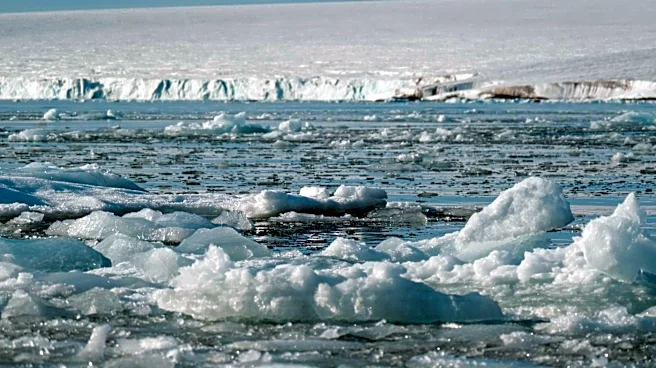
global sea levels have risen at an average rate of 2.06 millimeters per year since 1960, with the pace increasing to 3.94 millimeters per year between 2005 and 2023. The study attributes 43% of the rise to warming oceans, which expand as they heat. Melting ice from mountain glaciers, the Greenland Ice Sheet, and the Antarctic Ice Sheet contribute 27%, 15%, and 12% respectively, with changes in land water storage accounting for the remaining 3%. The research resolves a longstanding discrepancy between observed sea level rise and estimates from known causes, thanks to improved satellite measurements and analytical methods.
Why It's Important?
The findings underscore the persistent and accelerating nature of sea level rise, a direct consequence of climate change that poses significant risks to coastal communities and ecosystems. As sea levels continue to rise, they threaten to inundate low-lying areas, displace populations, and exacerbate the impact of storm surges and coastal erosion. The study highlights the critical role of ocean warming and ice melt in driving these changes, emphasizing the need for comprehensive climate mitigation strategies. The research also provides a more accurate framework for predicting future sea level rise, which is essential for planning and adaptation efforts worldwide.
What's Next?
The study suggests that even if greenhouse gas emissions are stabilized, sea level rise will persist due to the slow absorption of heat by the oceans and the continued melting of ice sheets. This ongoing rise will require long-term adaptation strategies, including infrastructure investments and policy measures to protect vulnerable coastal regions. The research calls for continued advancements in measurement technologies and climate modeling to refine predictions and inform global climate policy. Stakeholders, including governments and environmental organizations, are likely to use these findings to advocate for more aggressive climate action and resilience planning.
Beyond the Headlines
The research highlights the complex interplay between various factors contributing to sea level rise, offering insights into the broader implications of climate change. The study's resolution of measurement discrepancies demonstrates the importance of technological and analytical advancements in climate science. It also raises ethical considerations regarding the responsibility of industrialized nations to address the impacts of climate change, particularly on developing countries that are disproportionately affected. The findings may influence international climate negotiations and drive efforts to enhance global cooperation in addressing climate-related challenges.