



What's Happening?
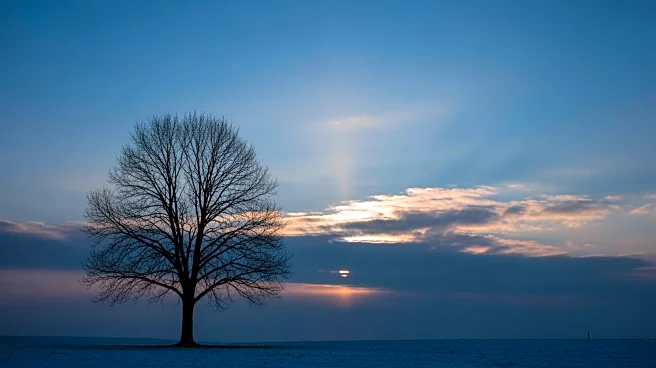
The winter solstice, marking the shortest day and longest night of the year, will occur on December 21, 2025, at 10:03 a.m. according to the Old Farmers Almanac. This astronomical event signifies the start of winter in the Northern Hemisphere, where daylight
will last only 7 hours and 40 minutes. The solstice occurs when the sun is directly over the Tropic of Capricorn, resulting in the Northern Hemisphere being tilted furthest away from the sun. This contrasts with the Southern Hemisphere, which experiences its longest day of the year. The winter solstice is distinct from meteorological winter, which begins on December 1 for climate data purposes. Following the solstice, daylight will gradually increase until the summer solstice on June 21, which offers 14 hours and 31 minutes of daylight.
Why It's Important?
The winter solstice is a significant astronomical event that affects various aspects of life and culture. It marks a turning point in the calendar, influencing agricultural practices, cultural traditions, and energy consumption patterns. In the U.S., the solstice is often associated with winter holidays and celebrations. The gradual increase in daylight following the solstice can impact mood and productivity, as longer days are generally associated with increased activity and economic output. Additionally, understanding the solstice is crucial for sectors like agriculture and energy, which rely on daylight patterns for planning and operations.
What's Next?
As the days begin to lengthen after the winter solstice, various sectors will adjust their operations accordingly. Farmers may start planning for the upcoming planting season, while energy providers might anticipate changes in consumption patterns as daylight increases. Cultural and community events celebrating the return of longer days may also take place. Additionally, the solstice serves as a reminder of the cyclical nature of Earth's seasons, prompting discussions on climate and environmental changes.