



What's Happening?
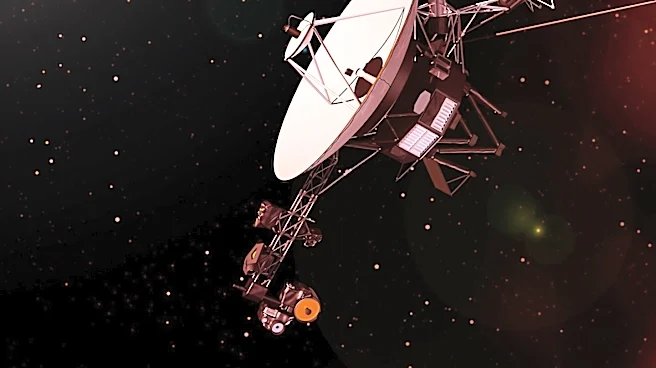
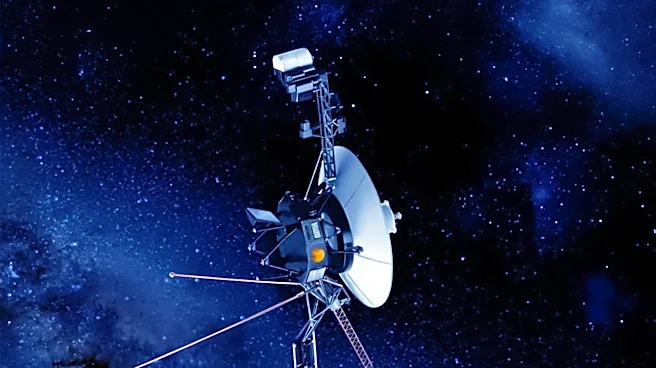
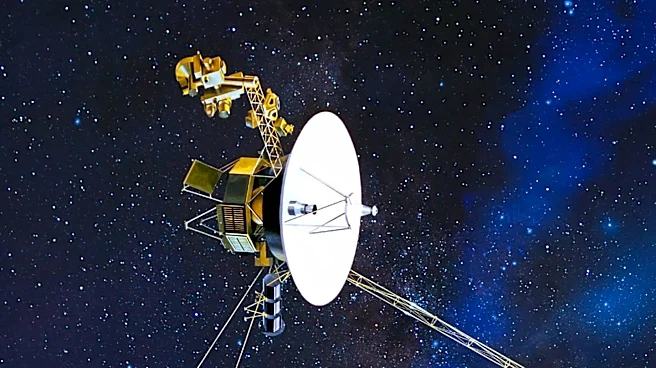
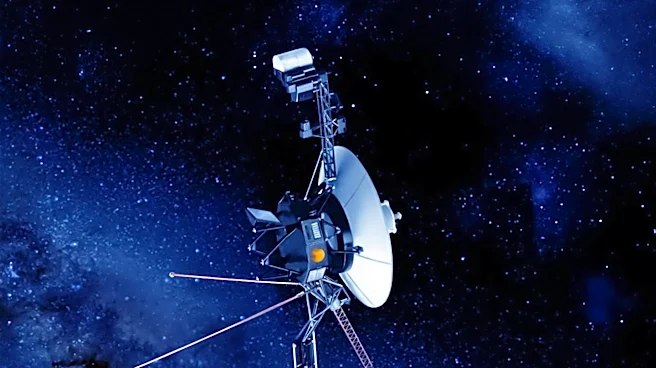
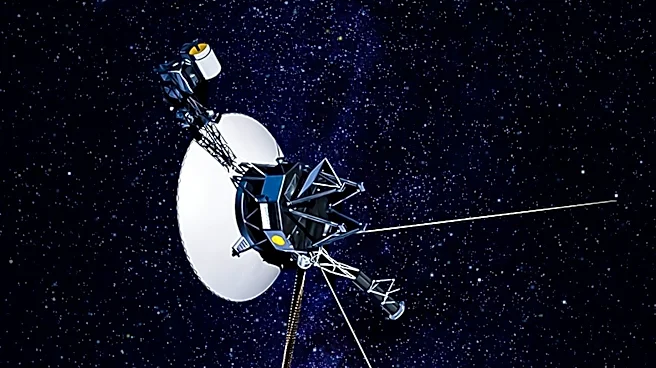
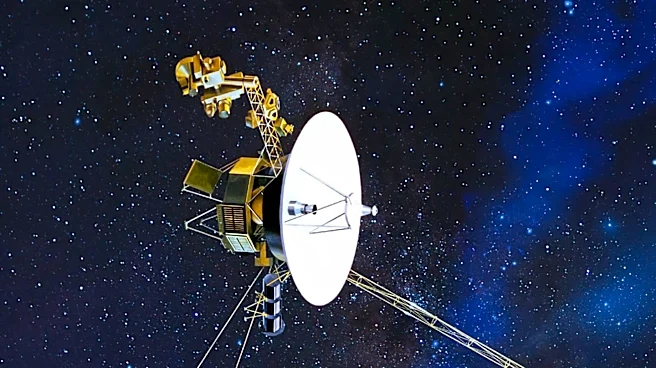
NASA's Voyager 1 spacecraft, launched in 1977, is currently operating with only two functional science instruments: a magnetometer and a plasma wave subsystem. This reduction in operational instruments is due to the spacecraft's diminishing power supply,
which is generated by radioisotope thermoelectric generators. These generators convert heat from decaying plutonium into electricity, but they lose about 4 watts of power each year. Recently, NASA engineers have implemented a 'Big Bang' maneuver on Voyager 2, which involves shutting down certain powered devices and replacing them with lower-power alternatives to extend the spacecraft's operational life. This maneuver is now being tested on Voyager 1 to potentially extend its mission.
Why It's Important?
The Voyager missions have provided invaluable data about the outer planets and the heliosphere, contributing significantly to our understanding of the solar system. As Voyager 1 continues to travel further into interstellar space, maintaining its operational capabilities is crucial for gathering data from regions of space that have never been explored by human-made objects. The success of the 'Big Bang' maneuver on Voyager 1 could ensure the continuation of this historic mission, allowing scientists to collect more data and gain insights into the interstellar medium. The mission's longevity also demonstrates the durability and ingenuity of NASA's engineering, inspiring future space exploration missions.
What's Next?
NASA plans to conduct a thermal test on Voyager 1 by the end of the month to ensure that the spacecraft's temperature remains within safe limits after the 'Big Bang' maneuver. If successful, this could allow the reactivation of the Low-energy Charged Particles experiment, which was previously shut down due to power constraints. The outcome of these tests will determine the next steps for Voyager 1's mission, potentially extending its operational life and scientific contributions.