







What's Happening?
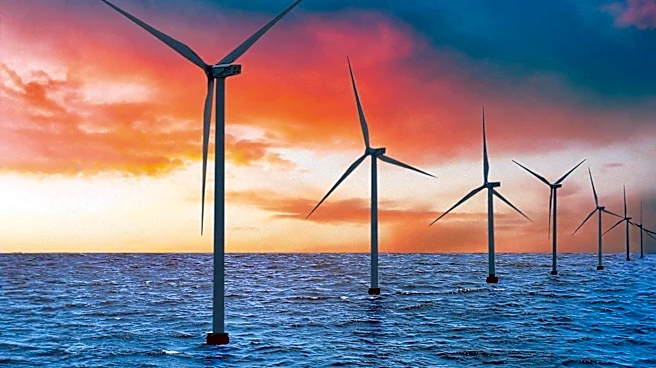
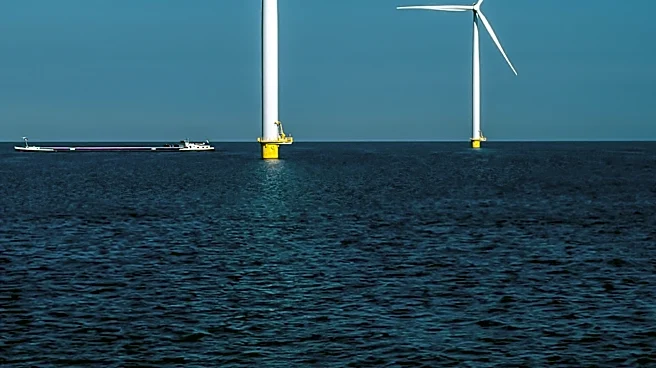
China has deployed its largest tension-leg floating offshore wind platform, designed to support a 16 MW turbine, in the South China Sea. Assembled at Gaolan Port in Zhuhai, the platform stands over 307 meters tall and weighs nearly 8,000 tonnes. It is
expected to generate approximately 54 million kWh annually. This deployment marks a significant step in China's efforts to commercialize deep-sea floating offshore wind technology. The turbine will be positioned near the Lufeng oilfield cluster, providing power to the grid through subsea cables. This initiative is part of China's broader strategy to expand its renewable energy capacity, having already surpassed a total installed wind power generation capacity of 660 million kilowatts.
Why It's Important?
This development underscores China's leadership in the global offshore wind energy sector, holding more than half of the global market share. The integration of renewable energy into oil and gas operations represents a significant shift towards sustainable energy practices. By expanding its offshore wind capacity, China is setting a precedent for other nations to follow, potentially influencing global energy policies and encouraging investment in renewable technologies. The success of this project could lead to increased adoption of similar technologies worldwide, contributing to global efforts to reduce carbon emissions and combat climate change.
What's Next?
China plans to continue expanding its offshore wind power generation capacity, with aims to add up to 63 GW of additional capacity. This expansion could lead to further integration of renewable energy into traditional energy sectors, potentially transforming the energy landscape. Other countries may observe China's progress and consider similar initiatives, fostering international collaboration in renewable energy development. The success of this project could also drive technological advancements and cost reductions in offshore wind energy, making it a more viable option for countries seeking to diversify their energy sources.