


What's Happening?
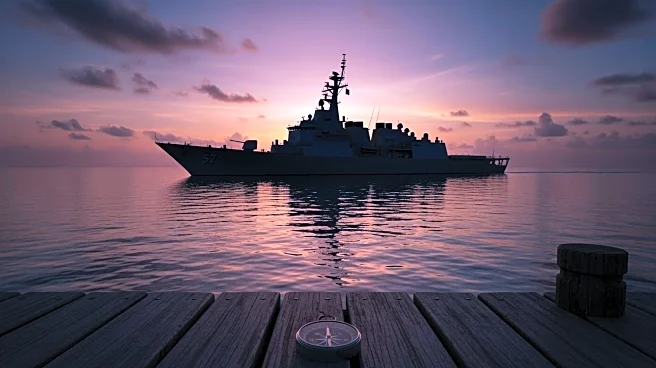
The United States has initiated a significant military buildup in the Caribbean, marking the largest such deployment since the Cuban missile crisis. This move includes an aircraft carrier strike group, multiple destroyers, amphibious assault forces, stealth
bombers, and special operations units. The Trump administration's actions are part of a campaign against alleged drug traffickers, with nearly 30 strikes conducted without congressional authorization. Additionally, a military blockade has been declared against illicit oil shipments, leading to the seizure of oil tankers. The administration's strategy appears to be aimed at pressuring Venezuelan leader Nicolas Maduro to relinquish power, although historical precedents suggest that economic pressure and external threats alone are unlikely to achieve this outcome.
Why It's Important?
The U.S. military's actions in the Caribbean could have significant geopolitical implications, particularly in terms of U.S.-Venezuela relations and regional stability. The Trump administration's approach, dubbed the 'Trump Corollary' to the Monroe Doctrine, signals a shift towards a more assertive U.S. presence in the Western Hemisphere. This strategy may impact U.S. relations with other countries in the region and could lead to increased tensions with nations that support Maduro. The outcome of this policy could influence perceptions of U.S. power and its willingness to use military force to achieve foreign policy objectives.
What's Next?
The future of U.S.-Venezuela relations will likely depend on the effectiveness of the current military and economic pressure. If Maduro remains in power, the U.S. may need to reassess its strategy, potentially leading to diplomatic or military escalations. Conversely, if Maduro steps down, it could validate the Trump administration's approach and reinforce U.S. influence in the region. The situation will require careful monitoring, as any changes in leadership or policy could have far-reaching consequences for regional dynamics and U.S. foreign policy.