





What's Happening?
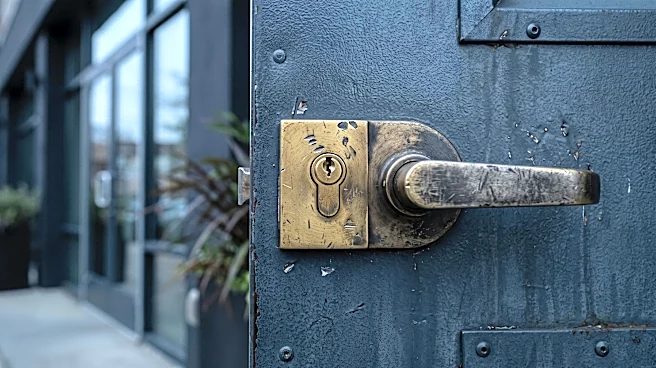
Craig Takehara, owner of Binchoyaki, a restaurant in Sacramento, expressed frustration after police did not respond to a recent break-in at his establishment. The incident occurred early Thursday morning when two individuals drilled through the restaurant's
keyhole. Takehara believes his alarm system deterred the intruders, but the Sacramento Police Department did not dispatch officers because his alarm permit had expired. This marks the fifth break-in for the restaurant, which has been open for 10 years, with previous incidents in April 2025 causing more extensive damage. The police department confirmed receiving an alarm activation but stated they handle such situations 'in accordance with established policies and procedures,' without specifically addressing the non-response.
Why It's Important?
This incident highlights a critical issue for small business owners in Sacramento and potentially across the U.S.: the reliance on alarm permits for police response to burglaries. The policy requiring an active permit for police dispatch to alarm activations can leave businesses vulnerable, especially if owners are unaware of an expired permit or the specific conditions for response. For businesses like Binchoyaki, which have experienced multiple break-ins, a lack of police presence can exacerbate feelings of insecurity and financial strain due to repeated damages and losses. This situation also raises questions about public safety priorities and the effectiveness of current policing policies in deterring crime and supporting local businesses. The owner's frustration reflects a broader concern among business owners about the level of protection and support they receive from local law enforcement.
What's Next?
The Sacramento Police Department has stated they are coordinating with Binchoyaki to document the incident in a report, but it remains unclear if their response policies regarding expired alarm permits will be reviewed or altered. Business owners in Sacramento are now likely to be more vigilant about the status of their alarm permits and the specific conditions under which police will respond. This incident could prompt local business associations to advocate for clearer communication from the police department regarding alarm response policies and potentially for more flexible or supportive approaches for businesses that are frequent targets of crime. The owner of Binchoyaki, despite the challenges, intends to remain in the historic Japantown area and encourages community support for local businesses, suggesting a continued effort to foster resilience within the business community.
Beyond the Headlines
The Binchoyaki incident delves into the complex relationship between law enforcement, local government, and small businesses. It exposes a potential disconnect where administrative requirements, such as alarm permits, can inadvertently undermine the primary goal of public safety. This situation could spark a broader conversation about the efficacy of such permit systems, especially in areas with high crime rates, and whether they inadvertently create barriers to effective police response. Furthermore, it touches upon the economic vulnerability of small businesses, which often operate on thin margins and can be severely impacted by repeated criminal activity and the perceived lack of adequate protection. The story underscores the need for a holistic approach to urban safety that considers both policy frameworks and the practical realities faced by community members and local enterprises.