







What's Happening?
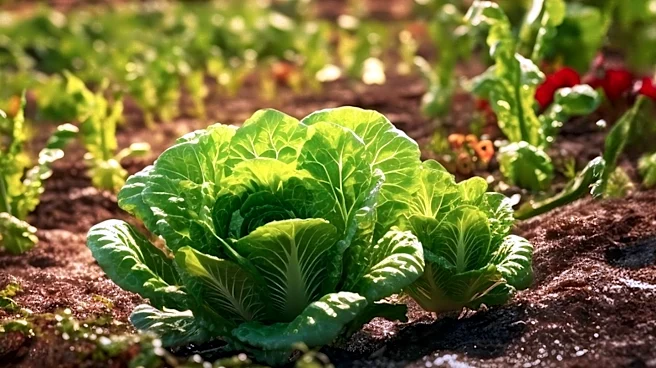
A new study by The Ecdysis Foundation, based in the Dakotas, has revealed that regenerative agriculture practices can significantly boost soil carbon capture and offer greater profit potential for farmers. The research, which sampled row crop fields,
found that soil on regenerative farms captured nearly 40% more carbon than on traditional farms. This leads to increased biodiversity and healthier food. Jonathan Lundgren, executive director of the foundation, stated that if North American producers fully adopted strategies like cover crops, it could capture and store one to two years of annual greenhouse gas emissions. The study also indicated that crop yields on regenerative farms match national averages for traditional row crops.
Why It's Important?
This study is highly significant for the U.S. agricultural sector and broader environmental efforts. It provides compelling data that regenerative agriculture is not only beneficial for the environment, particularly in combating climate change through enhanced carbon sequestration, but also economically viable for farmers. In an era where farmers face increasing input costs and economic struggles, the potential for greater profit from regenerative practices offers a crucial pathway to sustainability. This research could influence agricultural policies, encouraging federal and state governments to provide more support and incentives for farmers to transition to regenerative methods. It also highlights the agricultural sector's potential to play a major role in national climate solutions, impacting food security, public health, and rural economies.
What's Next?
The findings of The Ecdysis Foundation's study are expected to serve as a 'game changer,' influencing various sectors including consumers, policymakers, conservationists, the healthcare industry, and the media. There will likely be increased advocacy for policy changes to support regenerative agriculture, potentially leading to more federal assistance programs and funding for farmers adopting these practices. Farmers who have been hesitant due to upfront costs may find new incentives to transition. Further research and demonstration projects could be initiated to expand on these findings and address specific regional challenges. The study's publication in 'Environmental Research: Food Systems' will also contribute to scientific discourse and public awareness regarding climate-smart farming.
Beyond the Headlines
The implications of this study extend beyond immediate agricultural practices, touching upon the ethical and cultural dimensions of food production. It challenges the long-held paradigm of conventional farming by demonstrating that ecological health and economic prosperity are not mutually exclusive but can be mutually reinforcing. This shift towards regenerative agriculture represents a cultural transformation, emphasizing a holistic approach to land stewardship that benefits both the environment and human health. It also raises questions about consumer demand for sustainably produced food and the role of the food industry in supporting regenerative supply chains. Ultimately, this research contributes to a broader conversation about how the U.S. can build a more resilient, equitable, and environmentally responsible food system for the future.